
Manufacturing
Built, Wired and Test Run in Our Own Workshop
Upright, beam, bracing and shelf panel lines are designed, machined, assembled and commissioned at our works in Wuxi. Every line is run with production coil before it is packed, so the first profile it forms for you is not the first one it has ever formed.
Production flow
Four stages, one workshop
The engineers who review your profile drawing follow the line through machining, assembly and test running. A question about a slot pitch does not have to travel between companies before it is answered.
-
Profile and tooling design
Forming passes, punch tooling and cut-off are laid out from your drawing: material grade, coil width, hole pattern and the tolerance the finished section has to hold.
-
Machining and roll assembly
Base frames, stands, shafts and bearing housings are machined, and the rolls are set to the pass design and checked station by station.
-
Assembly and electrical build
Decoiler, forming section, punching station, cut-off and run-out table are built up as one line, wired to the control cabinet and checked through the sequence.
-
Test run and inspection
The line runs with production coil and the section, hole pitch and cut length are measured against the drawing before anything is packed.
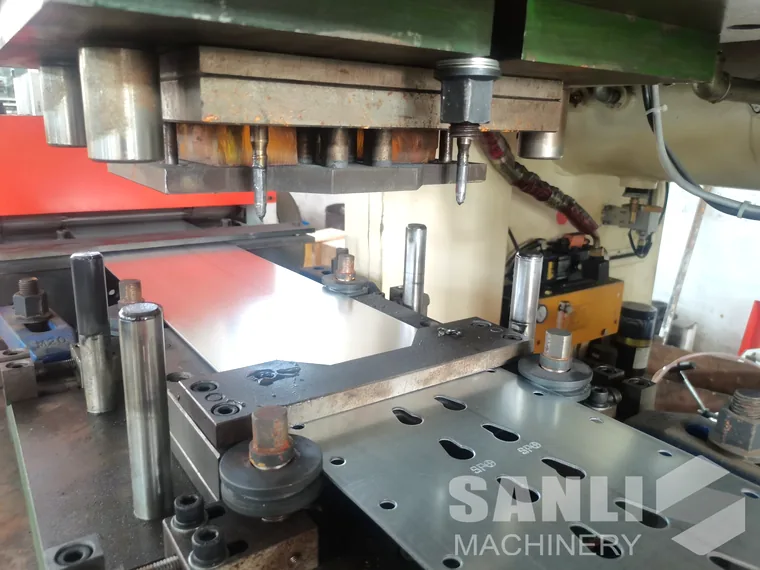
Roll tooling designed around the profile
A rack upright is a perforated channel, and the forming passes and the punching station have to be designed as one system — slot pattern, web width and station count all pull on each other. Tooling is laid out from your part: material grade, coil width, hole pattern and the tolerance the finished section has to hold.
- Forming passes — station count set by section depth and strip thickness, up to 18 on heavy uprights
- Punch tooling — slots and holes punched in line, so the pitch stays constant from the first metre to the last
- Cut-off — flying or stop-and-cut, chosen for the cut length and output you need
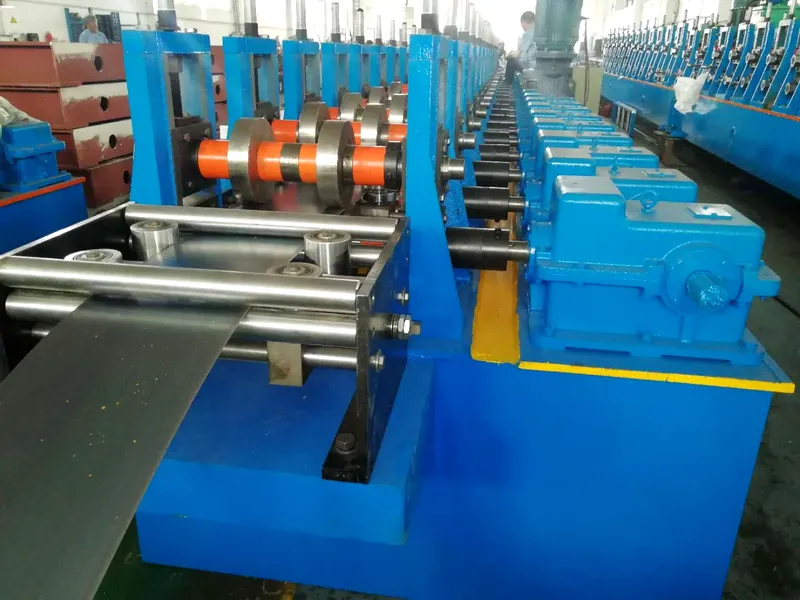
Machining and assembly on site
A line is not a small machine. Frames, stands, shafts and roll stacks are machined and then built up on the workshop floor under the cranes, because a line that runs to tens of metres has to be aligned as a whole rather than as a set of parts. This is where a good pass design becomes a line that runs straight — or does not.
- Frame and housing machining — base frames, stands and bearing housings machined to the pass layout
- Roll stack assembly — rolls set to the pass design, clearance checked station by station
- Line build-up — decoiler, leveller, forming, punching, cut-off and run-out aligned together
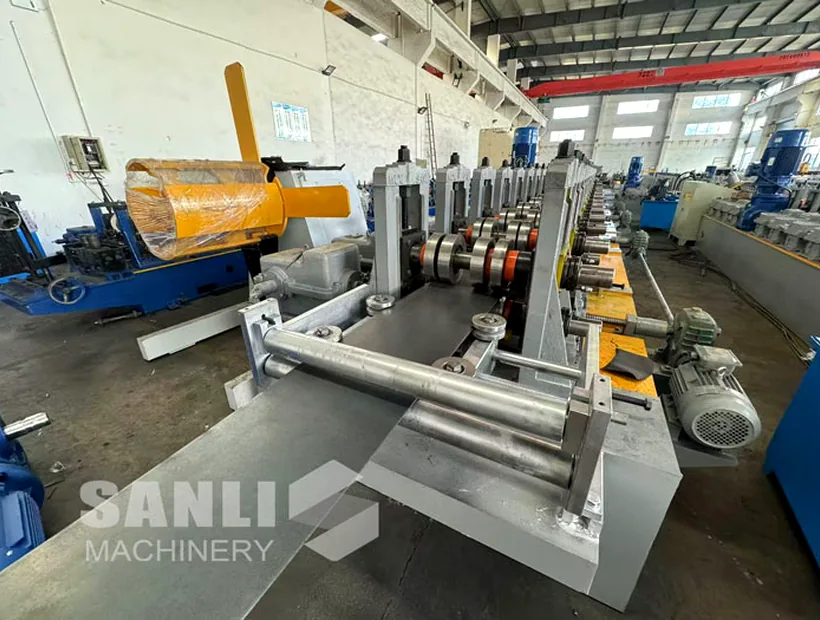
Test running before anything is packed
Every line is run under power before dispatch: strip through the forming section, holes punched, cut length measured, parts stacked. Test running is where a supplier finds out whether the tooling is right — we would rather find out in Wuxi than on your floor.
- Drive and control sequence — motors, hydraulics, pneumatics and PLC sequence run together
- Dimensional check — section, hole pitch, cut length and squareness measured against the drawing
- Recorded settings — roll gaps, punch heights and line parameters noted so the line can be set up the same way again
Quality control
Where the checks happen
A profile line can be built perfectly and still produce a bad section if one link in the chain is wrong. These are the points where it is caught, in the order it happens.
| Stage | What is checked | Why it matters |
|---|---|---|
| Incoming material | Coil grade, thickness, width and surface | A profile cannot be more accurate than the strip it is formed from |
| Tooling | Roll pass dimensions, punch clearance, cut-off blade | A tooling error repeats on every metre of profile |
| Assembly | Station alignment, shaft runout, frame squareness | Decides whether the section twists over a long run |
| Test run | Profile section, hole pitch, cut length, stack quality | Proves the line, not just the individual parts |
| Pre-shipment | Paint, guards, labelling, packing list | The line arrives ready to install, not short of parts |
Send us the tolerances your drawing calls for and we will confirm which of these checks applies to your line, and how it is measured.
Inside the works
The building, the tooling, the line
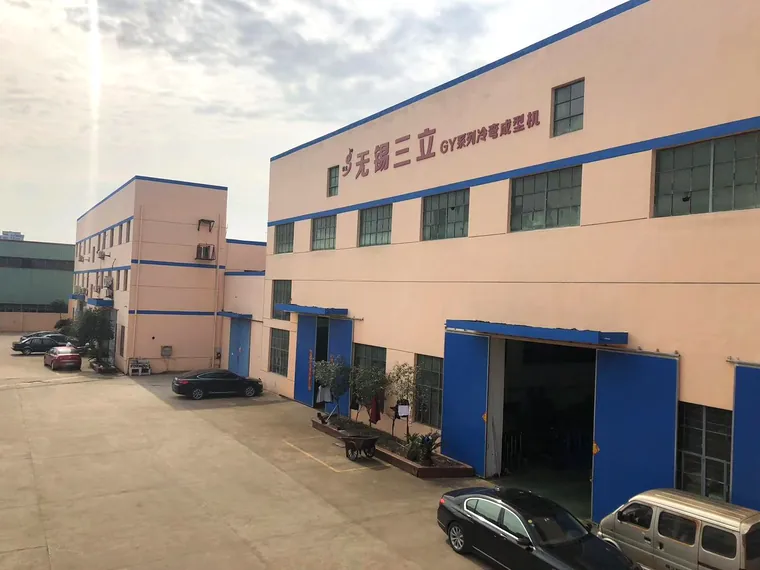
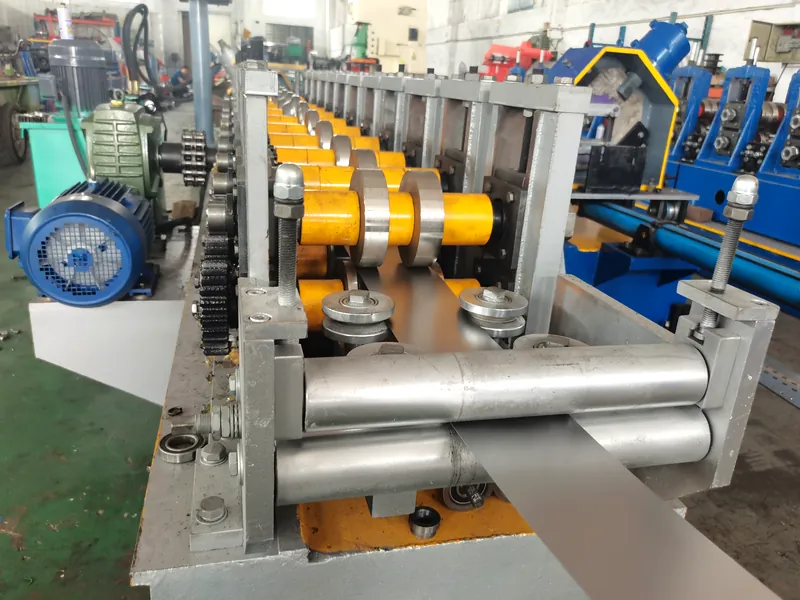
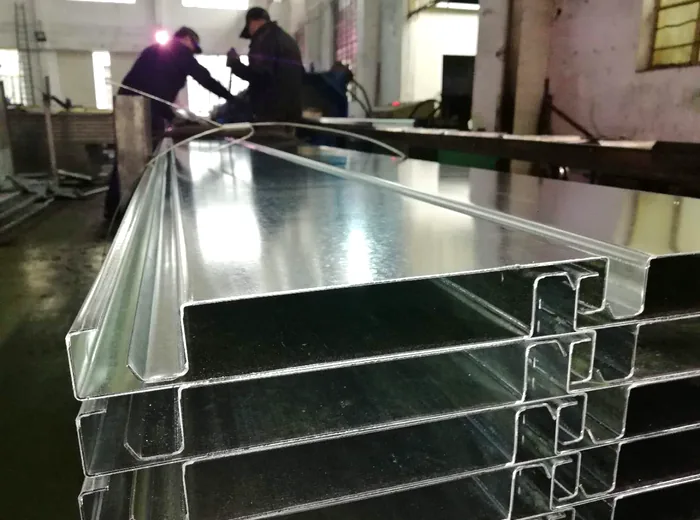
Photographs from the Wuxi works on Gandong Road — where the machines are machined, assembled and run before they are shipped. The company history and how a line is developed sits on the About page.
After shipment
From our floor to yours
A line is commissioned, not just delivered. The team that built the machine stays with it after it leaves Wuxi.
Installation and commissioning
Engineers attend site to erect, align and connect the line, then run it with your operators until it holds the profile.
Operator training
Set-up, tooling changes, roll gap adjustment and routine maintenance are covered on your own machine rather than on a general course.
Spare parts and support
Rolls, punch tooling and wear parts are supplied against the machine's tooling list, and technical questions go to the engineers who built the line.
Specify the line with the people who build it
Send the rack profile you need to produce, the strip thickness and the output per shift. Our engineers in Wuxi will review the drawing and come back with a configuration and a price.