
Product category
Custom Profiles & Special Machines
Lines for the parts outside the standard catalogue: partition beams, rivet beams, shutter support rails and roller rack profiles.
Machines in this category
4 machines listed. Every one is built to order and test-run on material before it ships.
-
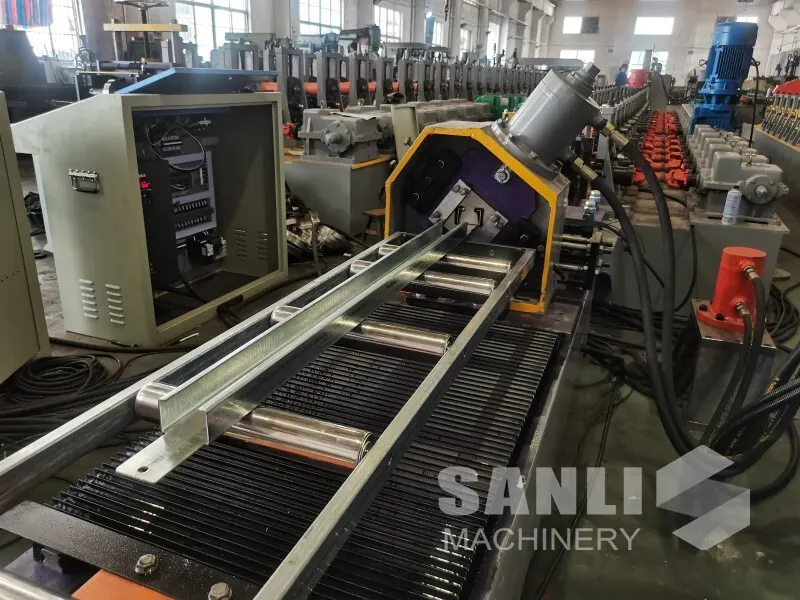
Rack Partition Beam Roll Forming Machine
Rack Partition Beam Roll Forming Machine is especially designed to produce the rack beam used for rack partition purpose. The whole rack…
View machine -
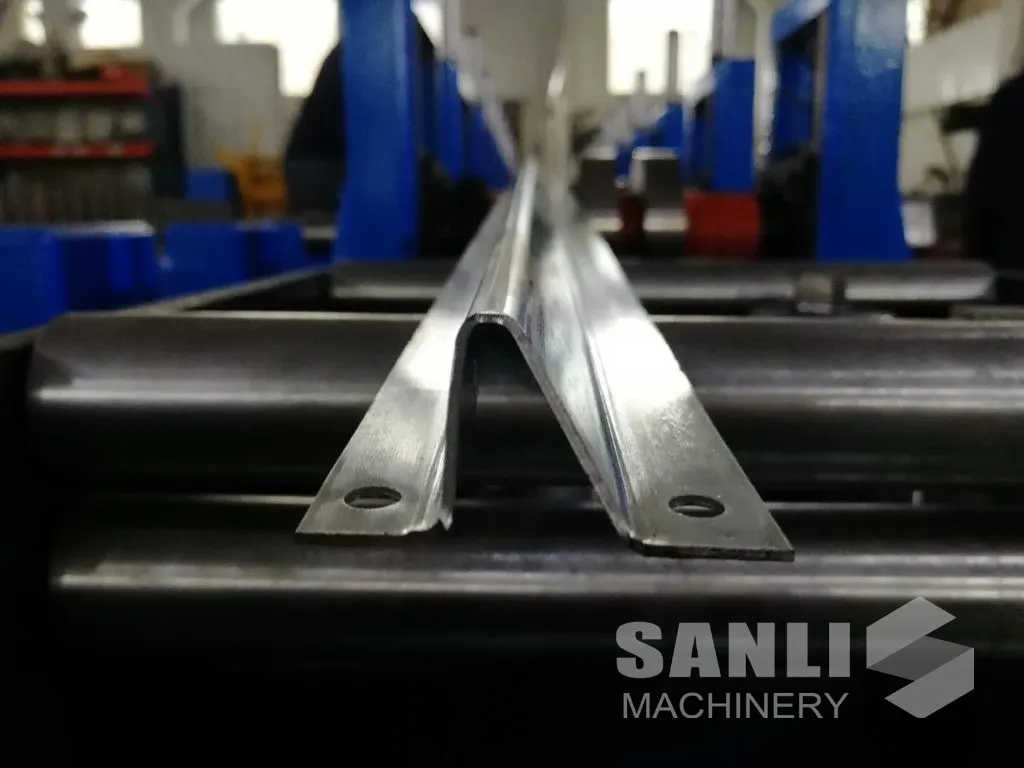
Rack Rivet Beam Forming Machine
Rack Rivet Beam Roll Forming Machine is used to produce rack rivet beams for warehouse pallet rack system, which support for pallet…
View machine -
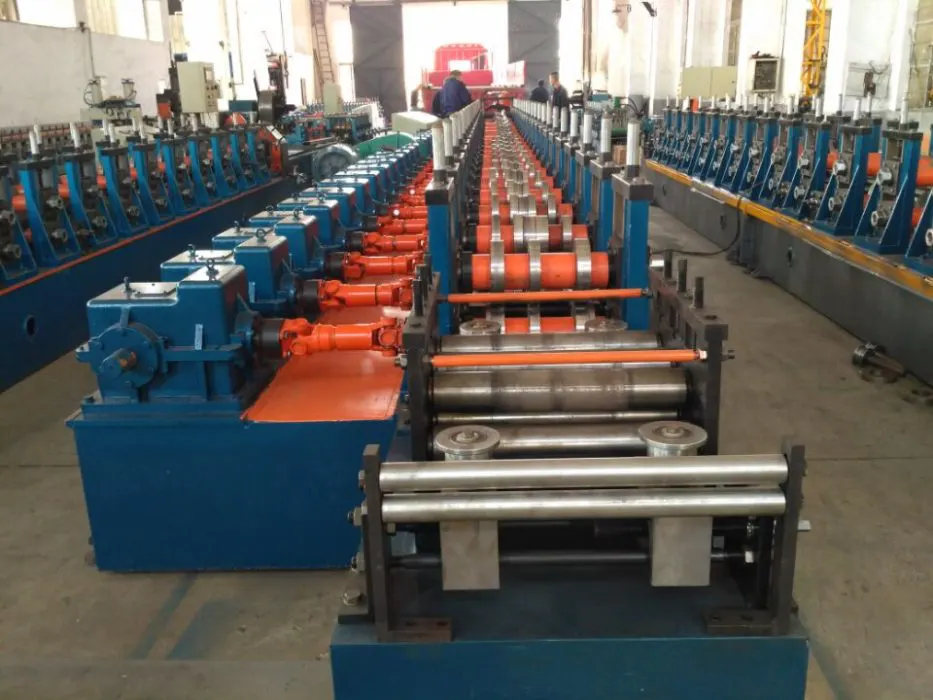
Shutter Rack Support Rail Roll Forming Machine
Shutter Rack Support Rail Roll Forming Machine is used to produce support rail for radio shutter pallet rack, the support rails in the…
View machine -
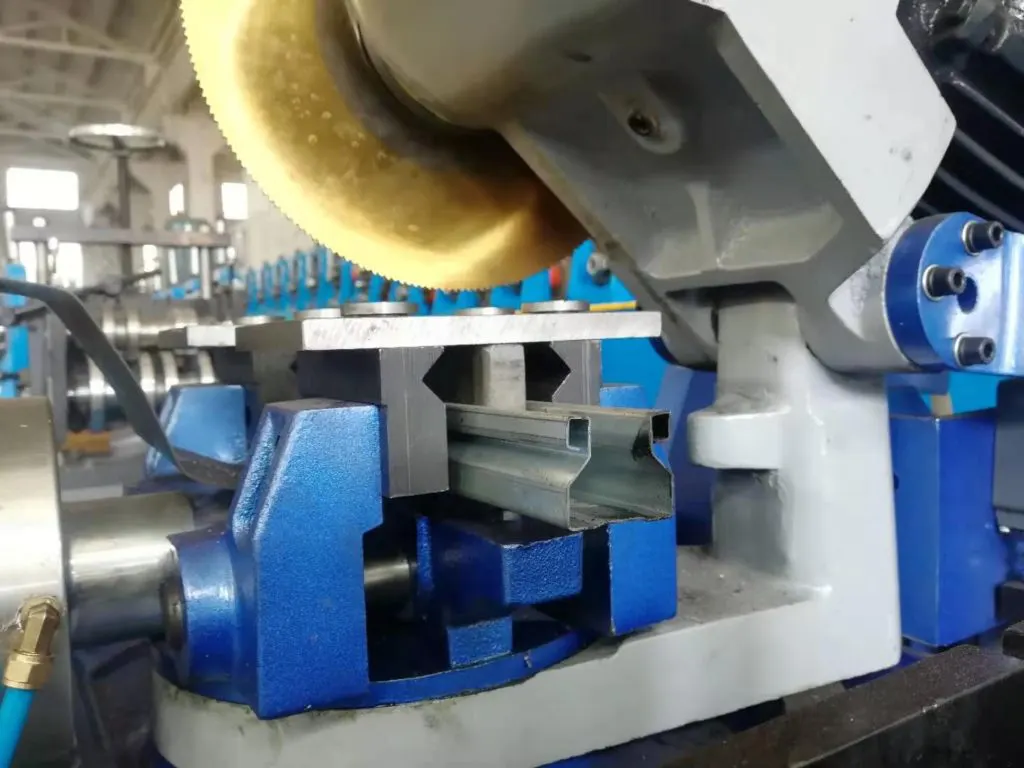
Roller Rack Roll Forming Machine
Roller Rack Roll Forming Machine is used to produce roller rack, which is an ideal gravity rack for distribution, manufacturing and retail operations…
View machine
How to choose
Choosing within Custom Profiles & Special Machines
When the profile is not in the catalogue
Most racking parts are standard across the industry, which is why the lines above exist as products. A meaningful share of orders is not: a partition beam for a specialised installation, a rivet beam with a particular pitch, a shutter support rail sized to a door system, a roller rack profile for a gravity flow lane. These are formed on the same principles and almost never on the same rolls.
A custom line is built around a drawing or a sample. What we need to quote is the section, the material grade and thickness, the hole or notch positions, the length and the output you need. Everything else — coil width, station count, motor size, cut-off type — follows from those.
What makes it custom rather than expensive
The cost of a custom line is mostly the roll tooling, and the tooling cost is mostly the number of stations the profile needs. A profile with a simple bend sequence on 1.5 mm strip may need thirteen stations; a profile with a return flange, a stiffening rib or a seam will need more. That is why two custom quotes can differ by a factor of two and both be correct.
The other variable is whether the profile is a one-off or a family. If you expect to sell three widths of the same section, the tooling can be designed for the family from the start and the second and third widths cost far less than the first.
Before you ask for a quote
Send the section drawing with tolerances and the hole layout, the material grade and thickness, the length range, and an honest figure for how many metres a month you expect to run. With those four things the answer is usually a configuration and a price. Without them the only honest answer is a range so wide it is useless.
If the volume is small, we will say so — a custom line that runs two hours a week rarely pays back, and a subcontractor or a modified standard machine is the better answer. That is a normal outcome, not a lost sale.
Not sure which line fits your profile?
Send the section drawing, the material and the output you need. We will come back with the machine configuration that produces it — and say so if a different process would suit you better.