
Product category
Rack Upright Lines
Three lines that form the load-bearing upright of a pallet racking frame, from 1.5 mm selective racking columns to 3 mm warehouse columns.
Machines in this category
3 machines listed. Every one is built to order and test-run on material before it ships.
-
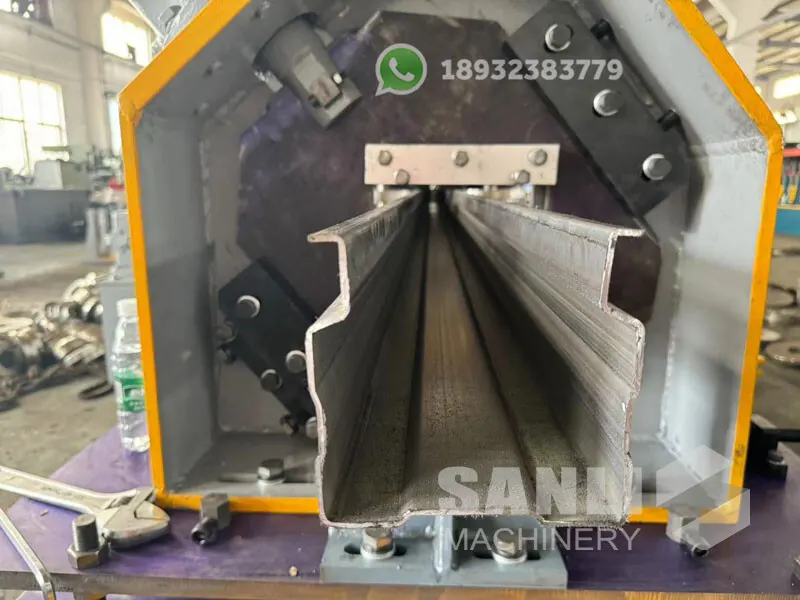
Heavy Duty Rack Upright Roll Forming Machine
The heavy duty rack upright roll forming machine is designed for producing high-strength warehouse rack uprights used in AS/RS storage systems. It…
View machine -
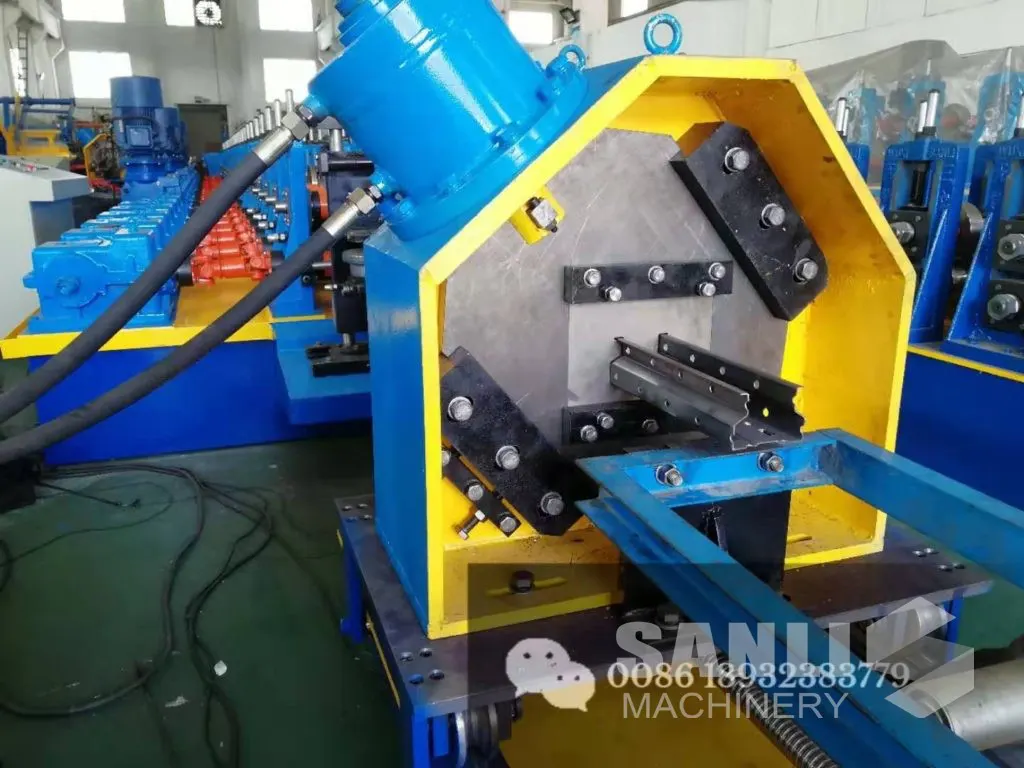
Rack Upright Roll Forming Machine
Rack Upright Roll Forming Machine (also called Omega-Racking Upright Roll Forming Machine) is used to produce rack upright for Warehouse Pallet Rack…
View machine -
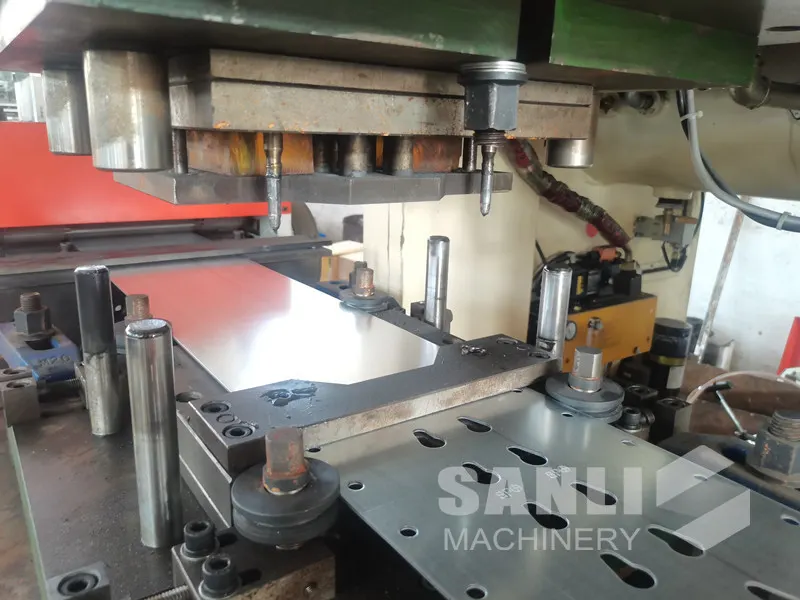
Punch Mould for Rack Upright
This Punch Mould is designed for wareshouse rack upright, there is different punch hole layout as per different customer requirement. As a…
View machine
How to choose
Choosing within Rack Upright Lines
What the upright line actually decides
The upright is the column of a pallet racking frame, and it is the part that fixes almost everything downstream: the beam connector pitch, the frame depth, the load rating and how much of the assembly can be automated. Because the hole pattern is punched before forming, the line is built around that pattern rather than around a strip width.
Practically that means two buyers can want the same 1.5–3.0 mm strip formed into the same 80 × 60 section and still need different machines, because one needs 50 mm hole pitch and the other needs a mixed pattern with a keyhole slot. That is why the first thing our engineers ask for is the section drawing with the hole layout, not the tonnage.
Which of the three fits
The standard upright line covers selective racking columns in the 1.5–2.5 mm range and is the machine most new racking plants start with. The heavy-duty line moves to 3.0 mm strip with a heavier frame and a larger main motor, for automated warehouse columns that carry more load per bay. The punch mould is not a line at all — it is the tooling that produces a specific hole pattern, and it is worth buying separately when you already have a line and want to add a second pattern without a second machine.
What changes the price
Strip thickness and the number of forming stations drive the frame size and the motor; the hole pattern drives the punching station and the tooling; the cut-off decides whether you get a clean square end or a burr you have to deburr by hand. Output matters less than people expect — going from 8 to 15 m/min usually costs less than adding a second punching station. If you are unsure which of these your part actually needs, send the drawing and we will tell you which spec is doing the work and which is being paid for nothing.
Not sure which line fits your profile?
Send the section drawing, the material and the output you need. We will come back with the machine configuration that produces it — and say so if a different process would suit you better.