
Export markets
Where Sanli Rack Forming Machines Are Running
Sanli rack roll forming machines run in eight countries, shipped from Wuxi since 2019 and recorded here by destination. This page lists what went where, what changed in the specification for each market, and what we do not have in any of them.
- Countries with installed lines
- 8
- Voltage built
- 380 – 480 V
- Frequency
- 50 / 60 Hz
- Earliest shipment on record
- December 2019
The forming section does not change. Everything around it does
A rack upright formed in Wuxi and a rack upright formed in Monterrey come off the same rolls. What changes is the specification wrapped around the forming section: the voltage and frequency the motors and controls are built for, the component list your electrical authority will inspect, the language on the drawings and the manual, the way the line is broken into container-sized sections, and whether the first article is signed in Wuxi or on your floor.
None of that is difficult. All of it is expensive to change after the machine is built, which is why an export order starts with a one-page site sheet rather than a price: voltage, frequency, phases, port of discharge, the certification your customer requires, and who will be standing at the line when it is commissioned.
The pages below are not market research. Each one lists what actually shipped, when, and what was different about that build. A supplier who cannot tell you which machine went to your country is describing a catalogue, not a factory.
The six markets with a shipment record and a page of their own
| Market | Grid | What shipped | Since |
|---|---|---|---|
| India | 415 V / 50 Hz | Upright, bracing, angle, ZS beam, punching lines | 2020 |
| United States | 480 V / 60 Hz | Upright line in three containers, bracing line | 2021 |
| Vietnam | 380 V / 50 Hz | Beam, support bar, automatic box beam, bracing | 2020 |
| Bangladesh | 380 – 400 V / 50 Hz | P step beam line, upright line | 2019 |
| Philippines | 220 / 440 V / 60 Hz | Fully automatic upright line with a 100 t press | 2021 |
| Mexico | 440 V / 60 Hz | Upright line for an automated high-bay store | 2024 |
Also shipped to Pakistan (beam line, 2021) and Spain (shelf support bar lines, 2021). Neither has enough of a record to describe yet, so neither has a page.
What we do not have
This decides whether we are the right supplier for you, so it belongs before the machines rather than in a footnote.
- No local service engineer in any of these markets. Support is remote, and a site visit is quoted per trip.
- No local spare parts warehouse. Spare rolls, punch tooling and consumables ship from Wuxi, which is a planning question rather than an emergency one.
- No reference visit arranged without the customer's permission. Where a customer agrees we will ask, but the answer is theirs to give.
- No local certification. If your authority requires a mark on the machine itself, the body that issues it sits in your country, and we build to what it asks rather than claiming a mark we do not hold.
How an export order is specified
The sequence that avoids most problems is short: freeze the section drawing, confirm the site sheet, agree the acceptance measurements, build, run the acceptance on production coil, then pack. Each step is cheap at the start and expensive later. A drawing revision after roll design starts is new tooling; a voltage change after the panel is built is a rebuild; a certification requirement raised after shipment is a customs problem.
Packing follows the line rather than the container. The forming machine sets the container length and everything else fills the volume around it, so the breaks fall where re-assembly is straightforward and where alignment can be recovered on site. Control cabinets travel crated and upright, hydraulic stations travel with the reservoir drained, and roll sets travel in the frame so the alignment set in Wuxi is not disturbed in transit.
Commissioning is remote by default: the line runs on video with our engineer, the first article is measured on camera, and the settings are adjusted against it. It works because the parameters that matter — roll gap, straightener setting, cut length — are visible on a measured sample rather than hidden inside the control system. A site visit is quoted as a separate line, and it is worth taking for a first machine or a new team.
Most shipped
The three builds that travel most
Each of these is a standard build quoted against your drawing, not a catalogue item. Where none of them fits, the custom range starts from the same components.
-
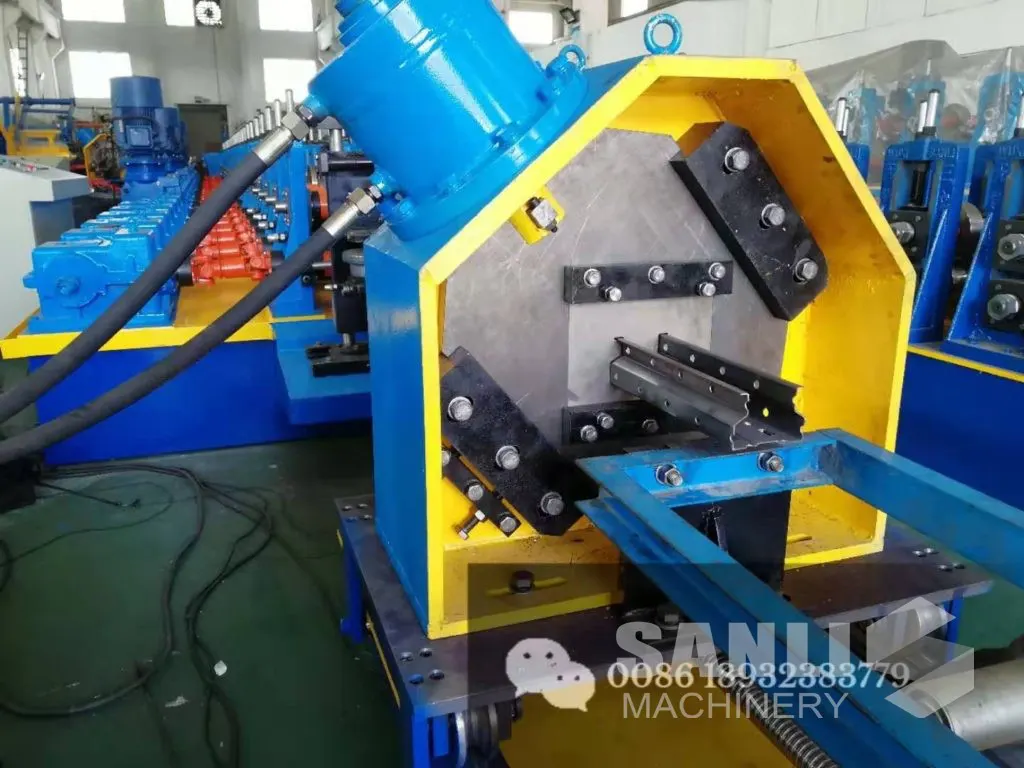
Rack Upright Roll Forming Machine
The most-exported build: 1.5 – 3.0 mm, 18 stations, holes punched on line.
View machine -
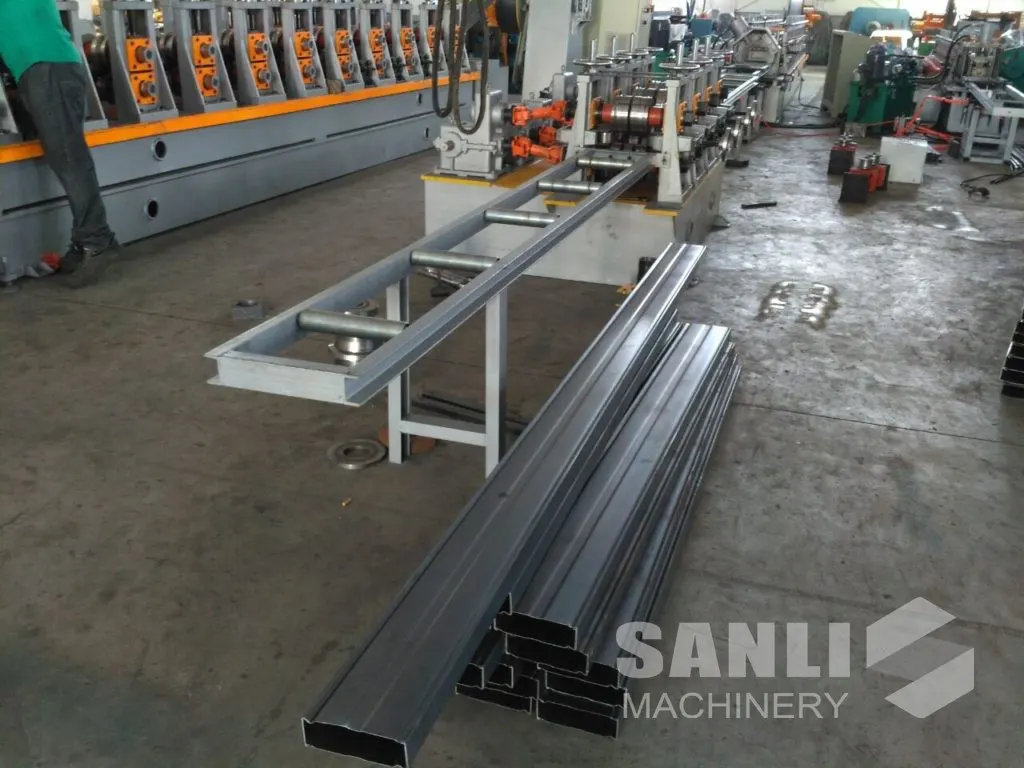
Rack Box Beam Roll Forming Machine
Beams at 1.5 – 1.8 mm on 14 stations — compact enough for a first export line.
View machine -
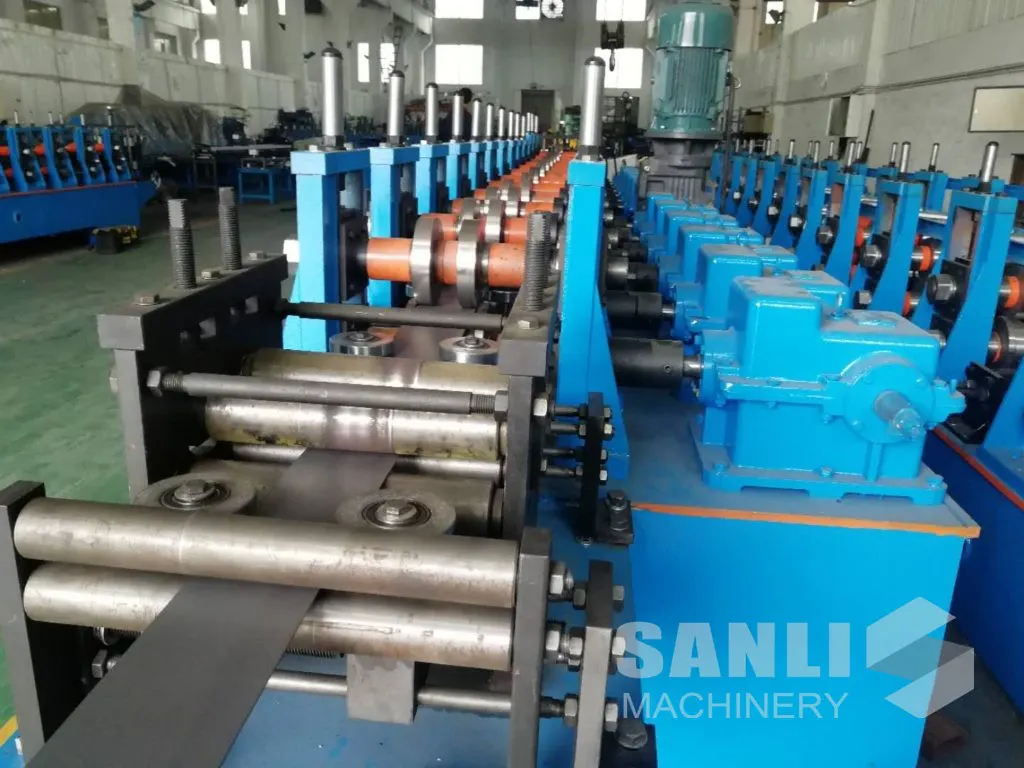
Rack Bracing Roll Forming Machine
The lowest-entry line of the three, and the one that benefits most from servo-follow cutting.
View machine
The other side
When importing a line from China is the wrong choice
Three situations where a local supplier is the better answer, and where saying so saves us both a project.
Same-week spares are the deciding factor
If a stopped line costs more per day than the machine costs in total, buy where the spares are on a shelf. No amount of specification closes a two-week sea freight on a critical part.
Your authority requires a mark on the machine itself
Where the machine has to carry a local conformity mark applied in the country of use, the machine has to be assessed there. We can build to the standard; we cannot issue the mark.
You need a reference plant you can walk through
We will ask customers whether they will host a visit, and some say yes. We cannot promise it before the order, so if a visit is a condition of purchase, treat the answer as no.
Before you order
Questions this page usually raises
Which countries have you shipped rack forming machines to?
India, the United States, Vietnam, Bangladesh, the Philippines, Mexico, Pakistan and Spain. The six with a page here have enough of a record to describe a build and a result; Pakistan and Spain have one shipment each so far.
Can you build for 60 Hz?
Yes. 60 Hz builds have shipped to the United States, Mexico and the Philippines. It is not a label change: at 60 Hz a motor wound for 50 Hz runs 20% fast, so the winding, the hydraulic pump displacement and the timed functions in the PLC all follow the site frequency.
Is commissioning included on an export order?
Remote commissioning is included: the line is run on video, the first article is measured on camera and the settings are adjusted against it. An engineer visit is quoted as a separate line, because travel and duration vary by destination. It is worth taking for a first machine or for a team that has not run a line before.
What documentation language do you supply?
English is standard for drawings, the manual and the electrical schematic. Spanish is available for Mexico and other Spanish-speaking markets on request, and imperial equivalents are added to the drawings where a plant works in inches. Say which at enquiry — the manual is printed and bound with the machine, not after it.
The six markets
Send the drawing and the output you need
The section drawing, the strip grade and the pieces per shift are enough to specify the machine — and enough to tell you if a different configuration would serve you better.