Rack Self-Locked Beam Roll Forming Machine

Self-locked beam line

Rack Self-Locked Beam Roll Forming Machine

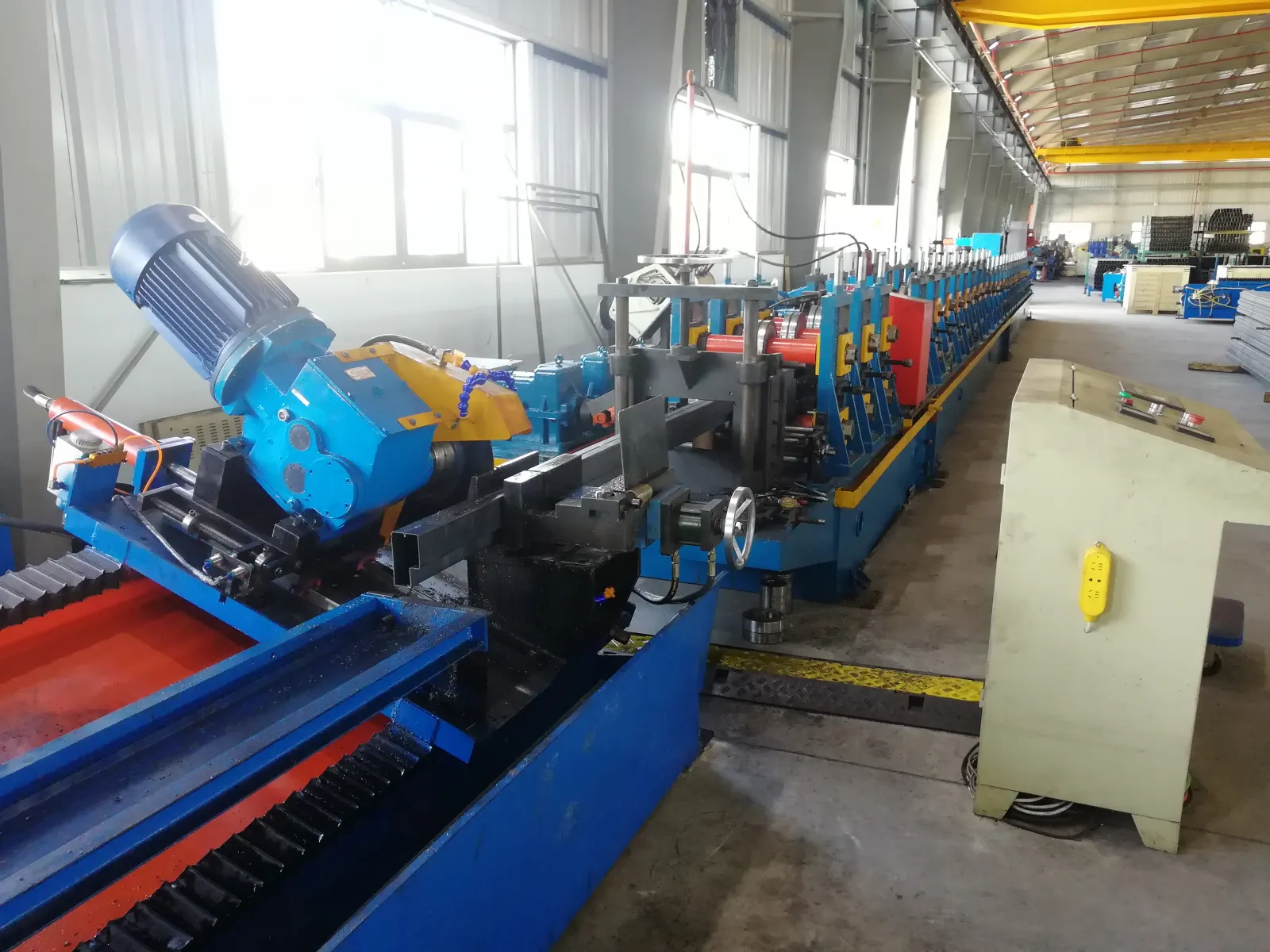
Rack self-locked beam roll forming machine produces the bolt-free beam that locks into the upright through a self-engaging connector, so frames need no tools at assembly. The 28-station line runs 1.5-1.8 mm strip at up to 15 m/min with a 37 kW main motor. The extra stations and power go into forming the locking lugs and closing the section in one continuous pass.

Material thickness
1.5-1.8mm
Production speed
0-15m/min
Roller stations
28 stations
Main motor power
37kW
WhatsApp

Overview

What the machine produces

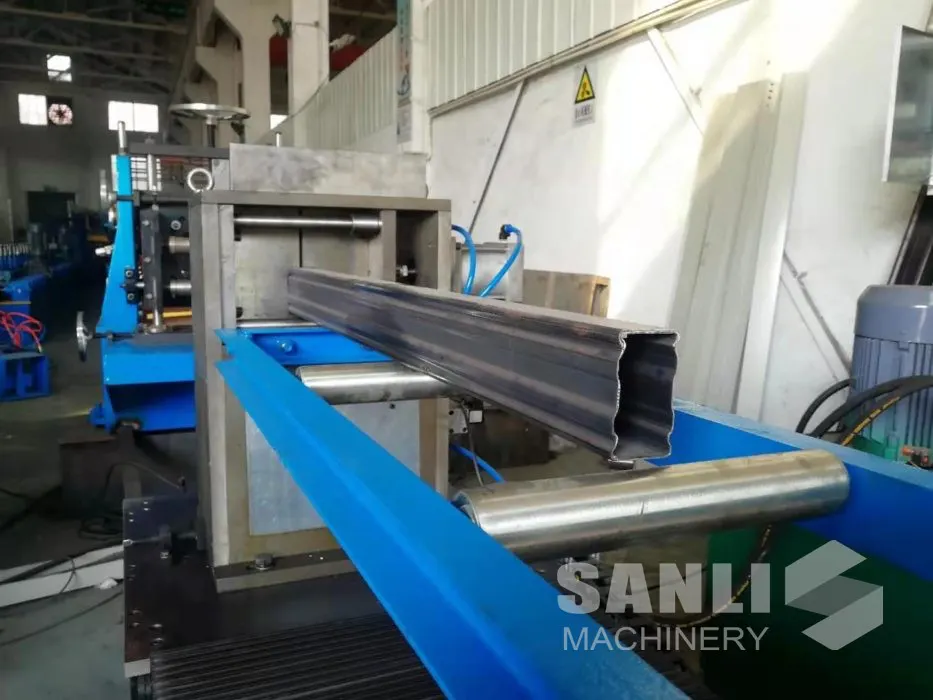
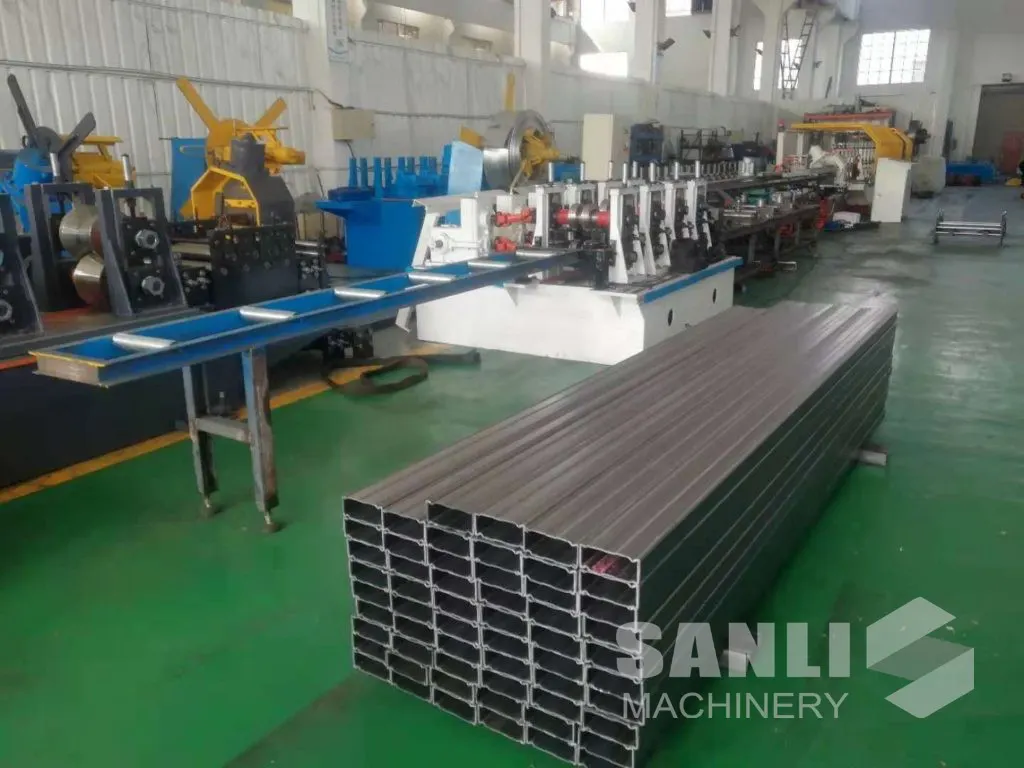
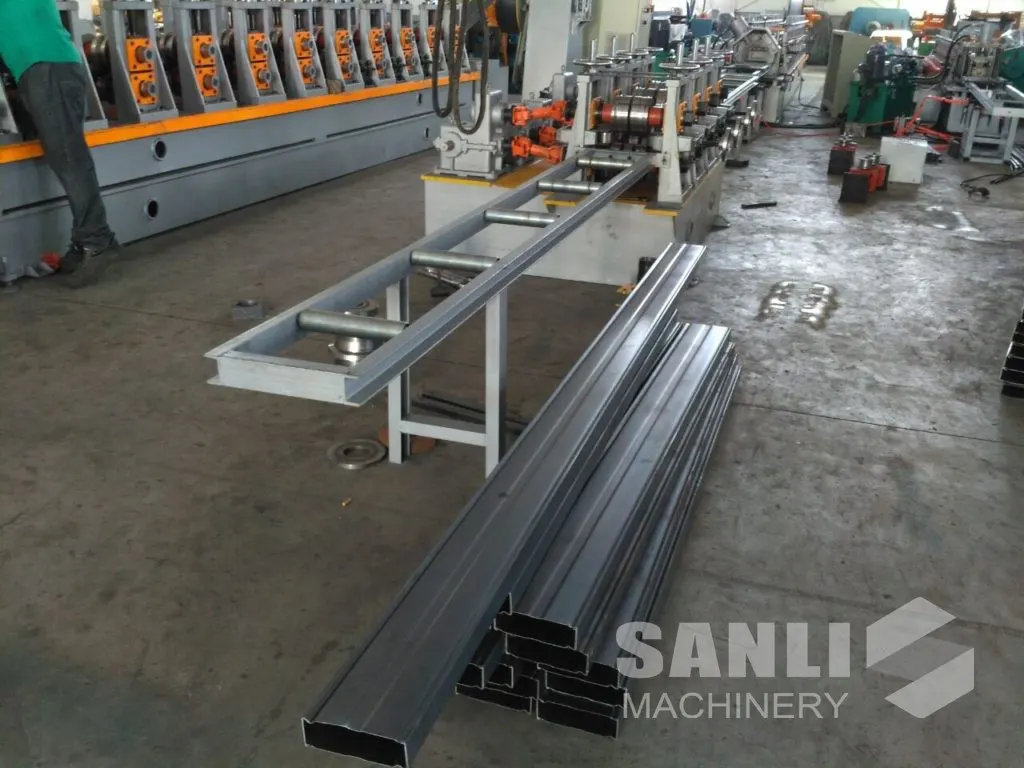
Rack Self-Locked Beam Roll Forming Machine is used to produce rack beams for warehouse pallet rack system, which support for pallet racks to assure the racks have adequate support for the weight of the products stored on them, ensuring they don’t bow or create an unsafe condition. The racking beams manufactured by our rack beam roll forming machine are available in multiple lengths and with different dimensions suitable for almost any warehouse layout and product mix. The right beams allow you to store material safely and securely while allowing complete accessibility for material handling equipment.

Sanli Machinery is one of the leading rack roll forming machine manufacturer in China. During the past 20 years, Sanli Machinery has already designed and manufactured more than 800 sets of rack beam roll forming machines for customers around the world.

Machine Advantage

  • Save 53mm material
  • Save two labor Cost
  • One time cutting makes perfect shape, can directly go to next welding process, no waste

Technical parameters

Technical parameters

Rack Self-Locked Beam Roll Forming Machine
Material thickness1.5-1.8mm
Roller stations28 stations
Roller materialGCr15
Shaft material40Cr
Production speed0-15m/min
Main motor power37kW
Hydraulic cutting power7.5 kW
PLC controlPanasonic

Engineering trade-offs

Where the specification has to choose

Three decisions that change the machine, and how to tell which side of each one you are on.

Licensed connector vs your own design

If the locking lug geometry is licensed from a racking system owner, the roll set has to be cut to their drawing and cannot be adapted, so you carry the tooling cost with no design freedom. With your own connector design the tooling is yours and can be revised. Confirm which situation you are in before ordering, because it changes both the tooling price and whether a later section change is possible at all.

28 stations in line vs forming on a separate press

The extra stations form the locking lugs and close the section in one pass, and that is what the 37 kW motor is there for. The alternative is forming the lugs on a separate stamping press and feeding pre-notched strip into a shorter line. That saves machine cost but adds a press, a handling step and work in progress between the two. Above roughly 300 beams per shift the in-line version wins on labour alone.

Cassette vs full roll set change

A full roll set change on the same shafts takes four to six hours with two people and a crane. A cassette design carries each section on its own frame and swaps in roughly half that time, but adds to the machine price and needs floor space for the cassettes themselves. Choose cassette when you change beam height more than once a week. Below that frequency the hours saved do not repay the extra cost within a reasonable period.

Working flow

How the line runs

  1. Decoiling

    Coil is mounted and strip fed into the line. The line runs 1.5 to 1.8 mm strip, and the coil weight sets whether a manual or hydraulic uncoiler is specified.

  2. Feeding and levelling

    Strip is levelled and aligned before the first stand. The self-locking connector is formed from the strip edge, so a strip that enters off-line produces a connector that will not seat in the upright.

  3. Punching

    Beam holes are punched in the flat strip. Hole position relative to the connector matters on this beam: the connector locates the beam in the upright, and the holes set where the decking sits.

  4. Roll forming

    28 stations form the beam section and the locking geometry. The station count is high because the connector needs several small bends in sequence, and each one has to be formed without marking the visible face.

  5. Lock forming

    The self-engaging connector is formed at the exit stands, where the final bend angles decide whether the beam locks with hand pressure or needs a mallet.

  6. Cutting

    A hydraulic cut-off shears the beam to length. Beam length is a recipe value; the connector geometry is tooling, which is why a length change is free and a connector change is not.

  7. Run-out

    Beams leave on an out table. The connector end is the part that gets damaged in handling, so the table is set up to keep the ends clear of the floor.

Scope and options

What can be added to the line

The first option here is the one that most often decides the purchase.

  1. Cassette roll packs

    Roll sets on cassettes so a full change becomes a swap of about half the time of a station-by-station rebuild. Worth it above roughly one change per week; below that, the rebuild is cheaper than the cassettes.

  2. Servo punching

    Changes hole pattern from the recipe. Self-locking beams are often ordered in a range of lengths and hole layouts, so pattern changes come round more often than on a fixed-pattern beam.

  3. Second decoiler

    Two mandrels so the next coil is ready while the current one runs. On a 28 station line the coil change is the longest regular stop.

  4. Connector gauges and setting jig

    A set of gauges for the connector geometry, used at commissioning and after any roll change. It is a small cost that removes the most common cause of a beam that will not lock.

Before you order

Questions buyers ask before ordering

How much does a self-locked beam line cost?

A self-locked beam line costs more than a plain box beam line, and the reason is the locking lug geometry: forming the lugs and closing the section in one pass needs more stations, more motor power and tighter tooling. Whether the connector is your own design or a licensed one also changes tooling cost, since a licensed geometry has to be cut to someone else's drawing and usually cannot be adapted. Send the connector drawing and the beam heights you sell and we will price against that.

Can it make connectors to my own design?

Yes, and that is the usual arrangement. Locking lug geometry is proprietary to each racking system, so the roll set is made from your connector drawing or a physical sample. Send the drawing with the lug angle and engagement depth and we will confirm whether the geometry can be formed in line or needs a separate stamping step first.

Why does it need 37 kW when a box beam line uses 22 kW?

Forming the locking lugs and closing a self-locking section in one continuous pass takes more work per metre than closing a plain box. The extra power is not for speed, since the line still runs at 15 m/min. It covers the peak torque at the lug-forming stations. Undersizing there shows up later as surface marking and lug angle drift.

What is the changeover time between beam sizes?

Four to six hours with two people and a crane for a full roll set change on the same shafts. Beam length is not part of that, because length is set from the control panel. If you sell more than three beam heights, ask about a cassette design at quotation stage: it roughly halves changeover time but adds to the machine price.

Does the beam need a separate welding step?

Usually not. The self-locking design exists specifically to avoid welding the connector on. Where a welded connector is specified anyway, the beam comes off the line and goes to a beam welding machine. We build both machines, so they can be quoted as a pair if your product mix includes welded and self-locked beams. Note that a weld on a locking beam also has to be dressed and inspected, which is the cost the locking design removes.

What is the delivery time?

Around 60 to 75 days from deposit. The 28-station forming section and the locking-lug tooling set that figure, not assembly: the rolls are cut to your connector drawing, and a licensed connector geometry needs the drawing confirmed before cutting starts. A cassette set for a second beam height adds two to three weeks. Sea freight is 25 to 35 days to most ports.

Send the drawing, get a machine that fits it

Include the strip thickness, the coil width and the output you need per shift. Our engineers in Wuxi will review it and come back with a configuration and a price.

WhatsApp us