
Cost · what the number is made of
How Much Does a Rack Roll Forming Machine Cost?
A rack roll forming machine is quoted against a drawing, not sold from a price list, because the same nominal machine can be built for 1.5 mm or 3.0 mm strip, with or without on-line punching, and with a stop cut or a flying saw. Those five decisions move the price further than the make of the PLC does, and a supplier who quotes one figure without knowing them is quoting a range.
- Forming stations
- 13 – 30
- Main motor
- 15 – 44 kW
- Strip thickness
- 0.4 – 3.0 mm
- Quote basis
- drawing + output
Why there is no list price
Two machines that look identical in a photograph can differ by a factor in what they cost to build. The frame is not where the difference is — it is in the rolls, the shafts, the punch station, the cut-off and the control. A 1.5 mm general-purpose upright line and a 3.0 mm heavy-duty line share a layout and share almost nothing else.
That is why we quote against a drawing and an output figure. Not to keep the number secret, but because a number given without those two inputs describes a machine you are not buying. What follows is what moves the number, so you can see which of the five you are paying for.
The five variables that move the number
In order of how much they change the build: the thickness range, the number of forming stations, whether punching is on the line, the cut-off type, and how much of the line runs without an operator. The first two are structural — they change the machine. The last three are configuration — they change what the machine can do.
What each variable changes, and what you are paying for
| Variable | Lightest build | Heaviest build | What the money buys |
|---|---|---|---|
| Strip thickness | 0.4 – 1.2 mm | 2.5 – 3.0 mm | Roll size, shaft diameter, motor power, cut-off force |
| Forming stations | 13 – 14 | 23 – 30 | More stands, more rolls, longer frame and base |
| Punching | Off-line press tool | On-line station + tooling | Punch station, SKD11 tooling set, control integration |
| Cut-off | Hydraulic stop cut | Flying saw | Saw carriage, saw motor, servo synchronisation |
| Automation | Manual coil loading | Decoiler + accumulator + closed loop | Hydraulics, sensors, PLC programme, commissioning |
Every figure here is a specification from the machines listed below, not a price.
What a quote should itemise
A quote you can compare is one that states the specification rather than the model name. These are the lines that decide whether two quotes are for the same machine:
- The thickness range the machine is built for, in writing, and what changes above it.
- Station count, main motor power, shaft diameter and roll material — four numbers that explain most of a price difference.
- Whether punching is on the line, and how many punch tooling sets are included in the price.
- Cut-off type, and the range of finished lengths it holds without adjustment.
- Electrical specification by destination: voltage, frequency and phases, taken from a plant nameplate.
- What is excluded, stated as a list rather than left to be discovered.
What is usually not in the price
Freight and insurance are almost never in a machine price, and neither is anything that happens after the crate is opened. Those are real costs and they belong in the budget from the start, not in a supplementary invoice later.
- Sea freight, insurance and destination charges. A complete upright line with coil car and run-out normally takes three 40-foot containers, which surprises first-time buyers more than the machine does.
- Foundation, pit work, power drop and compressed air at the site.
- A commissioning visit, where remote start-up is not enough: it is quoted as its own line so it stays a decision.
- Spare rolls, a second punch set for a second hole pattern, and consumables.
- Duty, VAT and local taxes, which are destination questions rather than machine questions.
Where the money actually goes
Inside the machine, cost concentrates in three places: the forming rolls and shafts, the hydraulic and cut-off assembly, and the electrical and control package. The frame is heavy, but it is not where the engineering is, and it is not where a cheap machine is cheap.
So when one quote comes in well below another for what looks like the same machine, the difference is almost always fewer stands, smaller shafts, a lighter cut-off or tooling that is bought in rather than made. Those are specification differences, not discounts. Ask which of the five variables is different, and the gap usually explains itself in one line.
How to compare two quotes
Put both quotes against the same drawing, the same strip grade, the same output target and the same electrical specification, then compare the same six numbers on each: thickness range, stations, main motor, punching, cut-off, automation. A quote that will not state them is not comparable, however low it looks.
The second comparison worth making is what happens after delivery. A machine that arrives with no spare rolls, no punch tooling drawing and no PLC backup costs more to run in its first year than the difference you negotiated on the price. Ask what documentation and spares are included before the order, not after.
Machines for this job
The builds that cover it
Each of these is a standard build quoted against your drawing, not a catalogue item. Where none of them fits, the custom range starts from the same components.
-
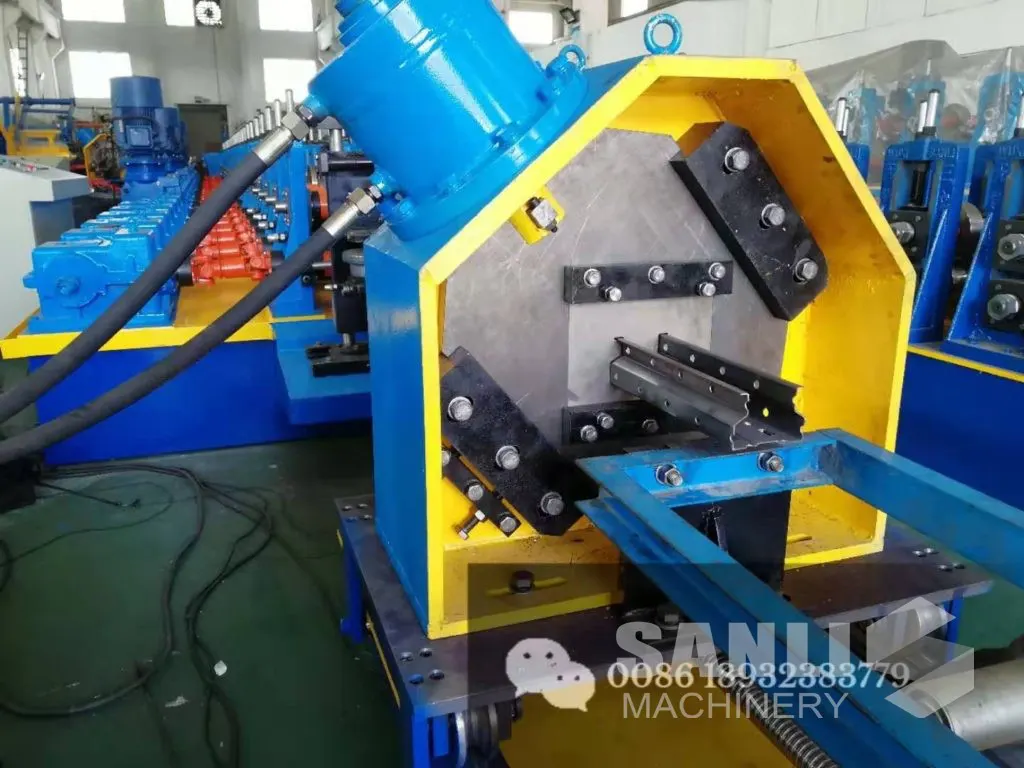
Rack Upright Roll Forming Machine
The mid-range reference: 1.5 – 3.0 mm, 18 stations, 15 kW, stop cut, holes on line.
View machine -
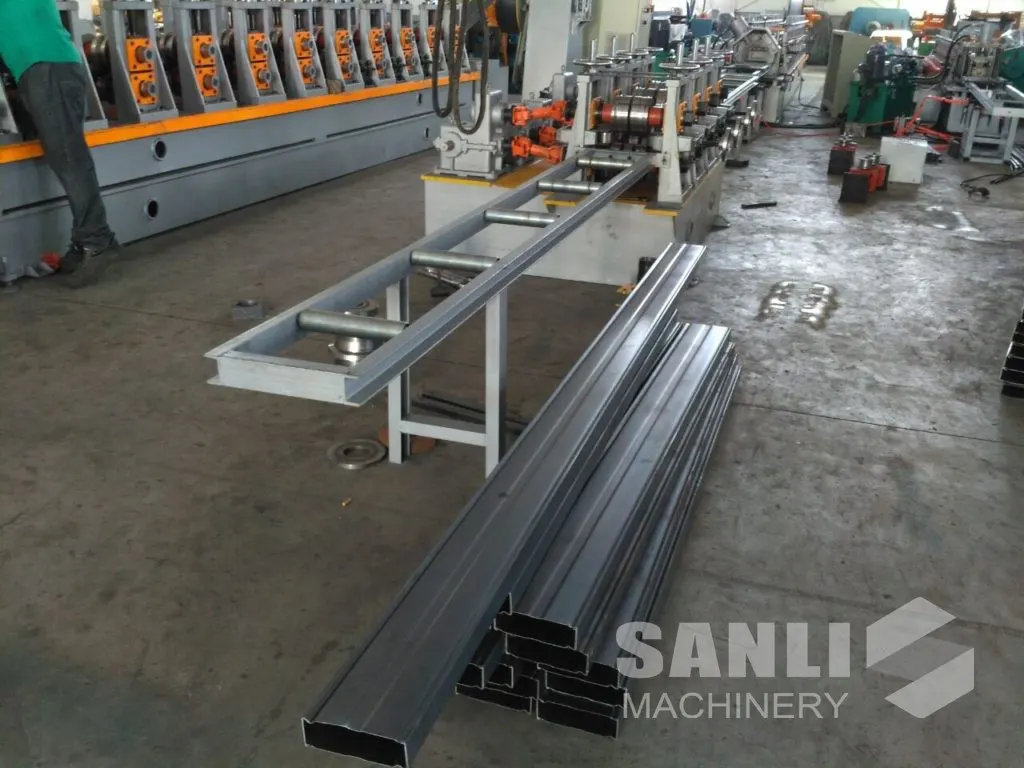
Rack Box Beam Roll Forming Machine
A lighter build to compare against: 1.5 – 1.8 mm, 14 stations, 22 kW, no punch station.
View machine -
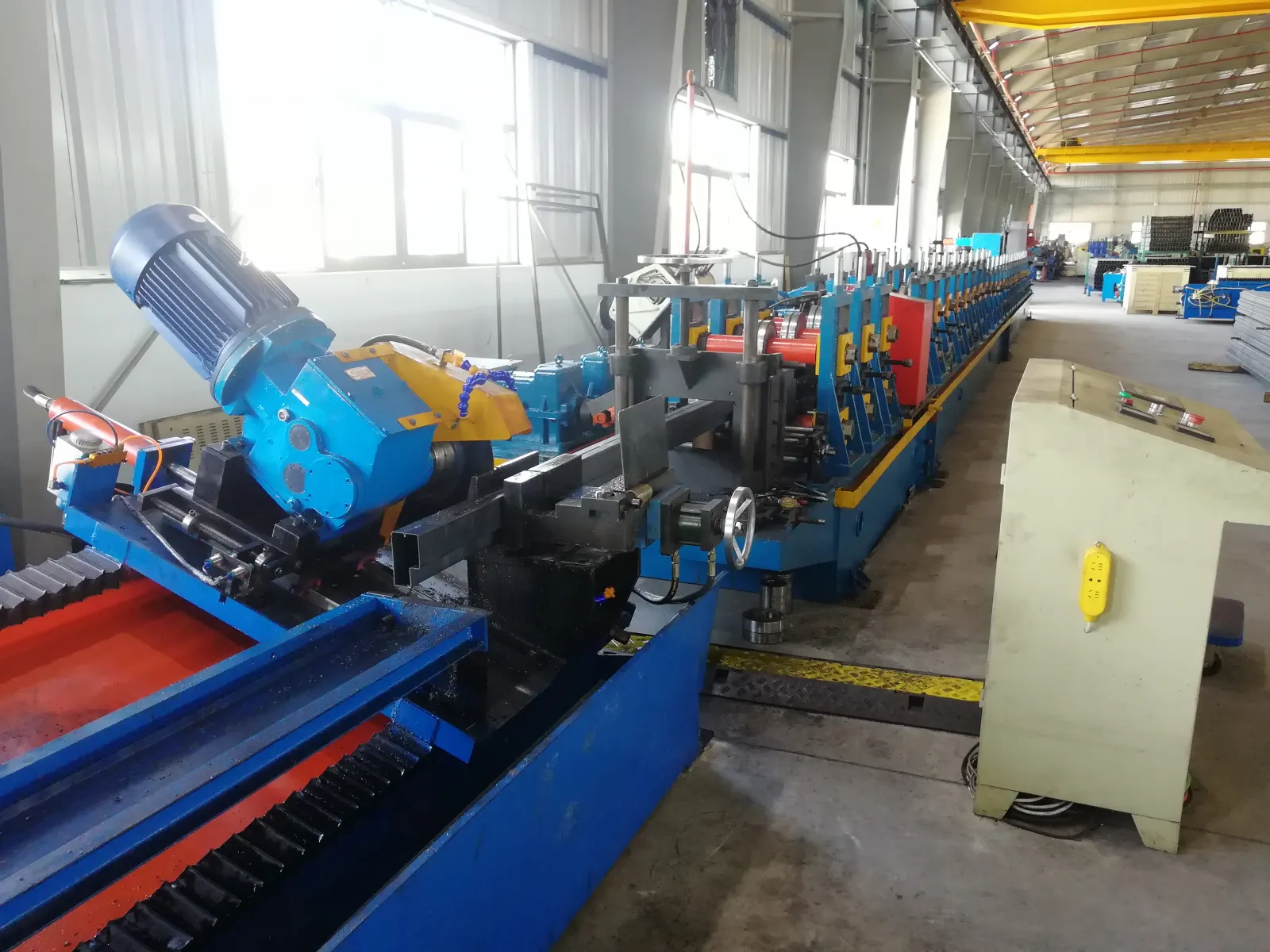
Pallet Rack Step Beam Roll Forming Machine
The top of the range in this family: 23 stations, 30 kW, flying saw and 18.5 kW saw motor.
View machine
The other side
When the price is not the problem
Three cases where the cheapest machine is still the wrong purchase, and the saving never arrives.
Buying the smallest build to save on the quote
A 13-station line bought for strip it was not designed around runs at the top of its range from the first day. The saving is spent on slower output and earlier tooling wear, and it does not come back.
Tooling up before the section is frozen
Rolls and punch tools are made to a drawing. A revision after roll design starts is new tooling, and it costs the same the second time as the first. Wait for the section to settle.
Volume that will not keep the line loaded
Under roughly 200 t of strip a year on one section, the capital sits idle. Bought profile and a press brake will often deliver the same orders with less money tied up.
Before you order
Questions this page usually raises
Why will you not publish a price list?
Because a published figure would describe one configuration and be applied to another. The five variables in this page change the build, not just the margin: a machine for 0.6 mm shelf panels and a machine for 3.0 mm uprights share a layout and almost nothing else. Send the drawing, the strip grade and the output you need, and the quote will show which of the five is driving the number.
What is the cheapest configuration that still works?
The smallest standard build that covers your thickness with headroom: around 13 – 14 stations, a hydraulic stop cut, off-line punching and manual coil loading. It is a real machine and it forms good parts. What it will not do is hold output when the order book grows, and that is the number to weigh against the lower price.
Does a used machine save money?
Sometimes, and only when the roll set matches a section you actually form. Rolls are made for one profile; a used line whose rolls were cut for a different section is worth its frame and its controls, not its tooling. Check roll condition, shaft wear and whether the punch tooling drawing comes with it — a machine without its tooling drawings is hard to keep running.
Which of the five variables should I decide first?
Thickness range, then station count — they are the two that change the machine rather than its configuration. Punching, cut-off and automation can be added to a correctly sized machine later at some cost; a machine built for the wrong thickness cannot be corrected at all without new rolls, new shafts and usually a new cut-off.
Other selection guides
Selection guides
Head to head
Send the drawing and the output you need
The section drawing, the strip grade and the pieces per shift are enough to specify the machine — and enough to tell you if a different configuration would serve you better.