
Beam lines · comparison
Box Beam vs Step Beam: Which Machine to Buy
A box beam machine forms a closed rectangular beam from two halves and closes the seam; a step beam machine forms an open profile whose stepped flange carries the decking panel. Box beam is 14 – 16 stations on a 22 kW motor, step beam is 23 stations on 30 kW with a fly saw — the difference is the geometry, not the builder.
- Box beam strip
- 1.5 – 2.0 mm
- Step beam strip
- 1.2 – 1.6 mm
- Stations
- 14 – 16 vs 23
- Main motor
- 22 kW vs 30 kW
Two different answers to the same load
A pallet beam has to carry a load over a span with as little steel as possible. There are two ways to do it. The box beam closes the section into a rectangle, which puts material far from the neutral axis and gives high stiffness per kilogram. The step beam keeps the section open and turns the top flange into a step, which is a poorer shape structurally but gives the decking panel a seat and lets the beam be repaired or re-decked without dismantling the bay.
In a warehouse that never changes, the box beam is the better beam. In a warehouse where the decking is changed, damaged or upgraded, the step beam is the better system. That commercial argument, not the section modulus, is usually what decides which machine a plant buys.
Section and machine compared
| Box beam | Step beam | Self-locked beam | |
|---|---|---|---|
| Section | Closed rectangle | Open, stepped flange | Closed, locking lugs |
| Stiffness per kg | Highest | Lower, decking adds stiffness | High, connector does the locking |
| Decking | Sits on the beam top | Locates in the step | Sits on the beam top |
| Assembly | Connector, bolted or hooked | Connector, hooked | Tool-free, self-engaging |
| Forming stations | 14 – 16 | 23 | 28 |
| Main motor | 22 kW | 30 kW | 37 kW |
| Cut-off | Hydraulic cut-off, 7.5 kW | Fly saw, 18.5 kW | Hydraulic cut-off, 7.5 kW |
Station count follows the number of bends and the closing operation, which is why the two beam types are not interchangeable on one roll set.
Why the step beam needs more machine
The step beam line runs 23 stations on a 30 kW motor because the flange is formed and set in two planes, and because the open section has to leave the line straight without the closed profile helping it. The fly saw is the second difference: an open section cut with a stop cut tends to distort at the cut, and a fly saw cuts on the move without stopping the strip.
The box beam line runs 14 stations on 22 kW and closes the seam after forming. The closing operation is what makes the machine specific to the section: the two halves have to meet on the centreline, and the roll set that forms them is built around that closing pass rather than around the profile alone.
- Ask how the seam is closed, and what holds the two halves in alignment through the closing passes.
- For step beam, ask for the fly saw cycle time and the burr on the cut face.
- Check the roll set is for your beam height — a change of height is a change of rolls, not a setting.
- Confirm the connector type: hooked, bolted or self-locking changes the end detail and the tooling.
Running both types on one line
It is technically possible to build a line that forms both, and commercially it is usually a mistake. The roll sets are different, the cut-off arrangement is different, and swapping between them costs a shift plus a re-setup of the punch and the guides. Once both beam types sell in volume, a second dedicated line produces better parts per yuan than one line doing changeovers.
Where a dual-purpose line does make sense is a plant that runs one type in volume and the other occasionally, and would otherwise subcontract the second. In that case the dual build keeps the occasional work in house at a lower capital cost than two lines — provided the changeover is designed for, with quick-release cassettes rather than loose rolls.
Machines for this job
The builds that cover it
Each of these is a standard build quoted against your drawing, not a catalogue item. Where none of them fits, the custom range starts from the same components.
-
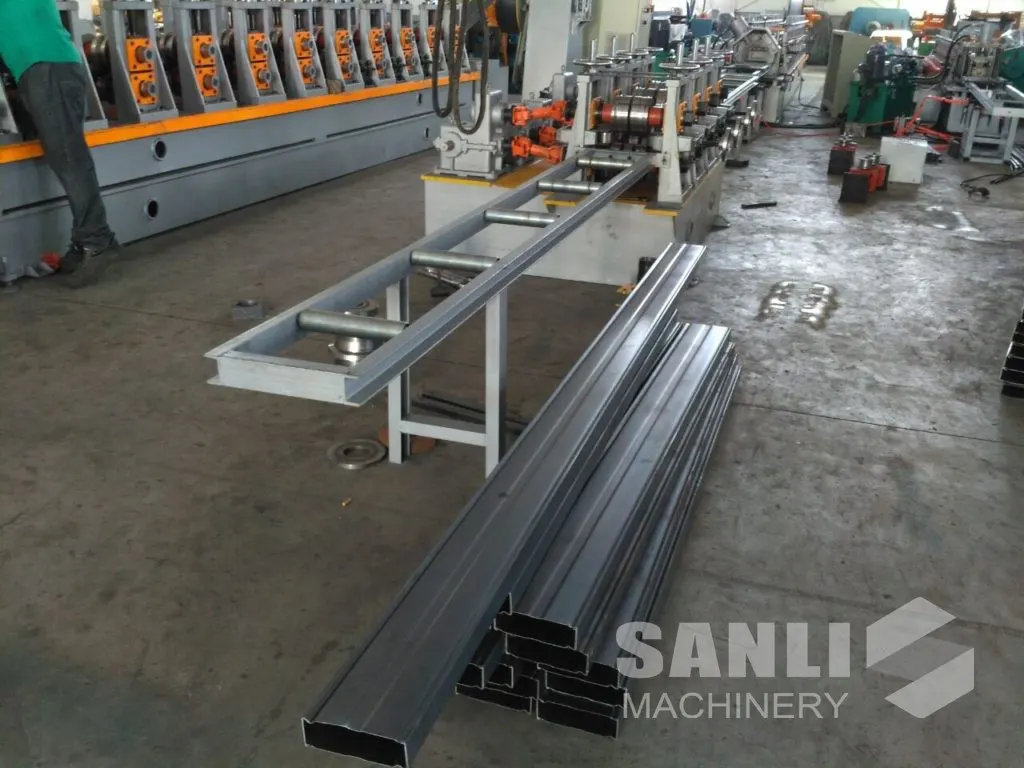
Rack Box Beam Roll Forming Machine
The standard box beam build: 1.5 – 1.8 mm, 14 stations, 22 kW, up to 15 m/min.
View machine -
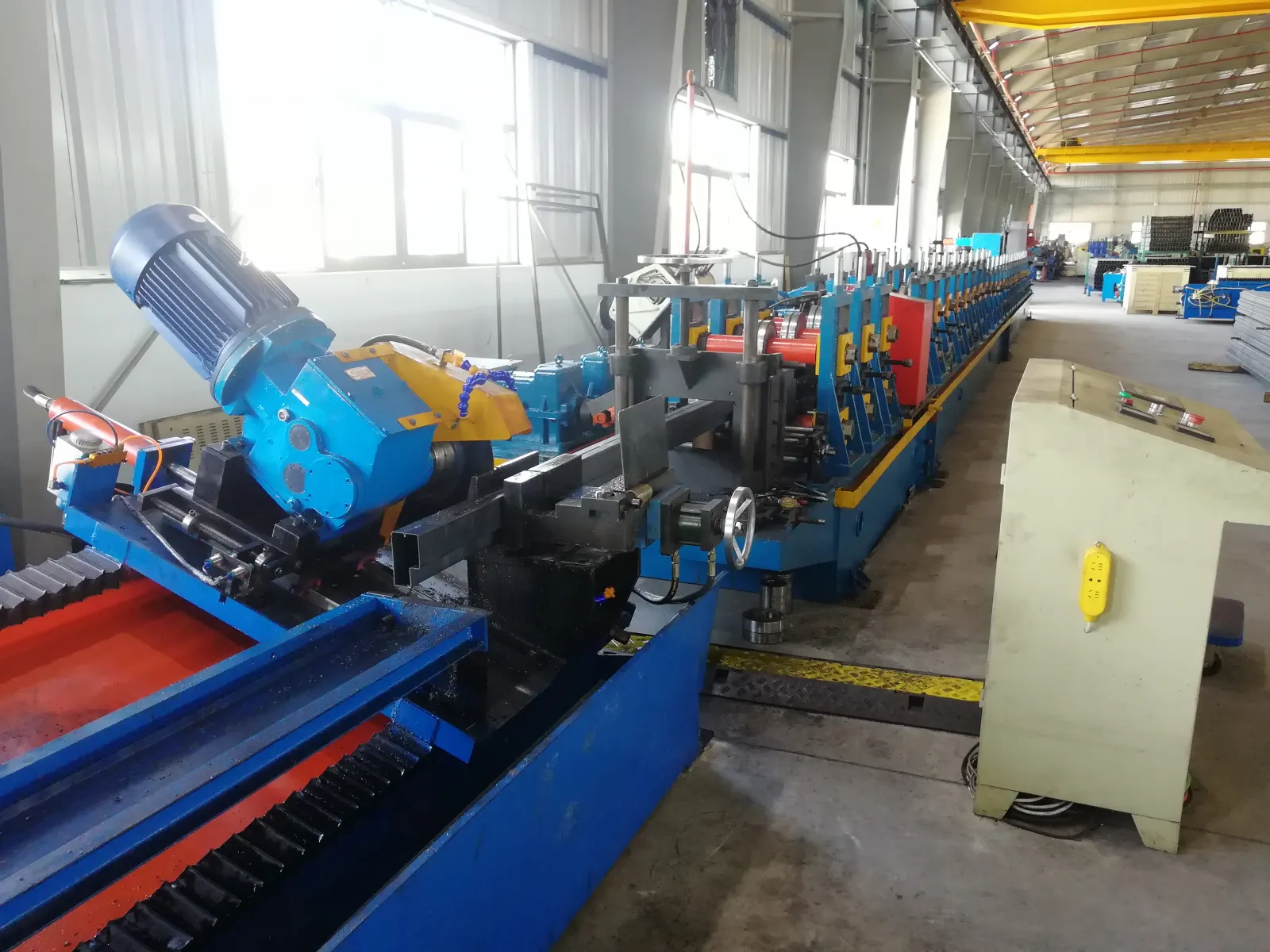
Pallet Rack Step Beam Roll Forming Machine
The step beam build: 1.2 – 1.6 mm, 23 stations, 30 kW, fly saw cut.
View machine -
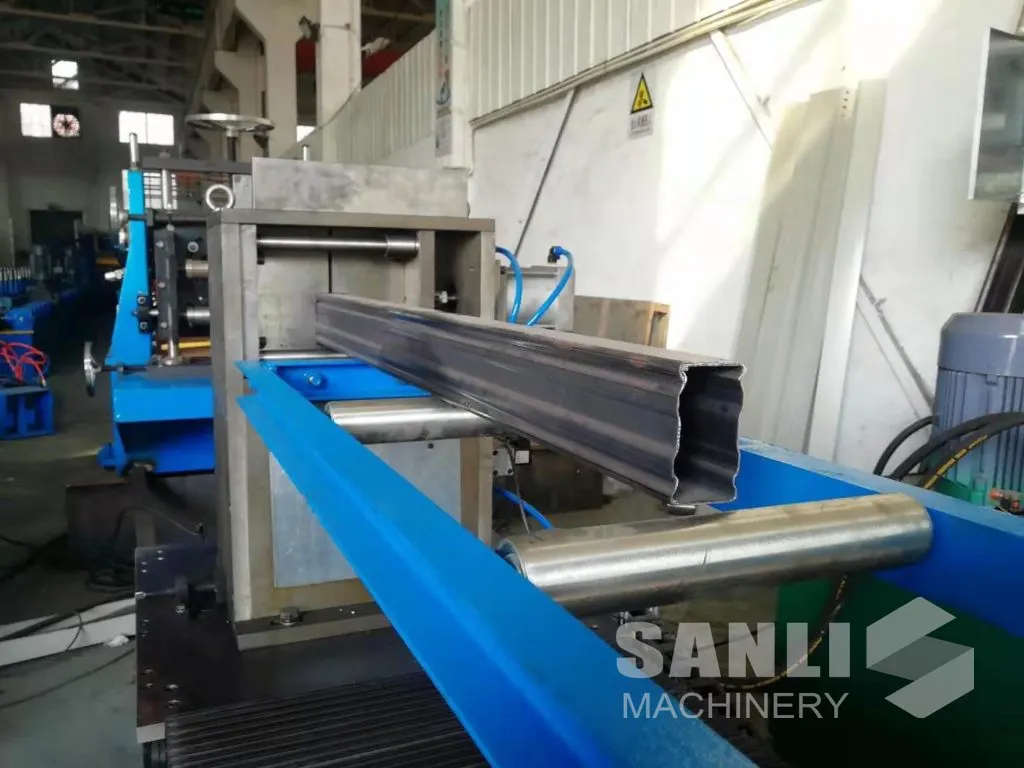
Rack Self-Locked Beam Roll Forming Machine
The third option: 28 stations, 37 kW, beams that lock without tools.
View machine
The other side
When neither beam machine is the right purchase
Beam lines are the second machine most plants buy, and the one most often bought too early.
You buy beams from a mill or a specialist
Beam forming is a volume business: the line only pays when it runs most days. A plant assembling racks from bought beams should put the capital into the upright or the coating line instead.
Your beam mix changes every order
Beam height and connector type come from the order. A line set up for one height, changed weekly, spends its life in changeover — the machine is not the constraint, the tooling change is.
You need one line to cover box and step beam equally
A dual-purpose line with a designed changeover works where one type dominates. Where they are equal in volume, two dedicated lines are the cheaper way to get good parts.
Before you order
Questions this page usually raises
Can one machine make both box beams and step beams?
Only with two roll sets, two punch arrangements and a cut-off that suits both, which in practice means a dual-purpose build with a designed changeover. The sections are formed differently — the box beam is closed after forming, the step beam is left open with a two-plane flange — so the roll sets are not interchangeable and the changeover is measured in a shift, not in minutes.
Which beam is stronger for the same weight?
The box beam, because closing the section puts material far from the neutral axis. The step beam trades some of that stiffness for a decking seat and for the ability to re-deck a bay without dismantling it. In practice the decking panel contributes to the step beam system, which narrows the gap but does not close it.
Why does the step beam line use a fly saw?
An open section distorts at a stop cut, and the stepped flange makes it worse because the cut passes through two planes. A fly saw cuts while the strip is moving, which avoids the distortion and removes the stop from the cycle. That is also why the step beam line carries an 18.5 kW saw against the box beam hydraulic cut-off at 7.5 kW.
What does a self-locked beam change?
It removes the separate connector: the beam end engages the upright directly, so frames assemble without tools. Forming it takes 28 stations and a 37 kW motor, because the locking lugs and the closing pass are formed in the same continuous run. If your customers assemble racks on site with unskilled labour, that is the argument for it.
Other selection guides
Selection guides
Head to head
Send the drawing and the output you need
The section drawing, the strip grade and the pieces per shift are enough to specify the machine — and enough to tell you if a different configuration would serve you better.