
Market · South Asia
Rack Roll Forming Machines in India
Sanli has shipped rack forming machines to India since January 2020, most recently seven machines in eight containers in March 2025 for a plant that ordered its whole part mix at once. India is the market where the ZS beam and any-position punching matter most.
- Grid
- 415 V / 50 Hz
- First shipment
- January 2020
- Largest order
- 7 machines, 8 containers
- Ports used
- Nhava Sheva, Mundra
What has shipped to India
The record starts in January 2020 with a rack beam machine built to a newly developed section, followed the same year by two shelf panel machines — one of them made to the customer's own profile rather than to a standard one.
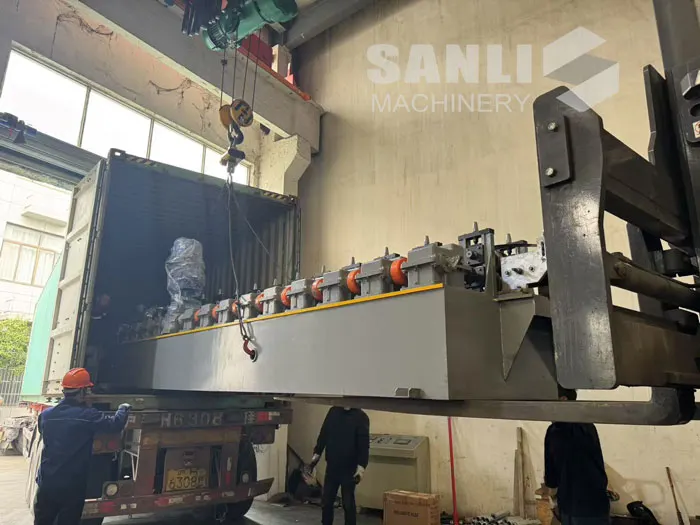
The March 2025 order is the one worth reading. Seven machines in eight containers, loaded on 30 March 2025, covering the upright, the bracing, the angle section, the ZS beam and a separate punching line. That is the full part mix of a racking plant rather than a single line.
Seven machines in eight containers is not one machine per container. The forming machines are the long items and set the container length; decoilers, run-out tables, control cabinets and hydraulic stations fill the volume around them.
Shipments to India on record
| Date | What shipped | Note |
|---|---|---|
| January 2020 | Rack beam machine | Newly developed section |
| September 2020 | Rack shelf machine | Customer profile, not the standard one |
| November 2020 | Rack shelf machine | Standard build |
| March 2025 | ZS beam machine | On-line hydraulic punch, any position |
| March 2025 | Seven machines, eight containers | Upright, bracing, angle, ZS beam, punching lines |
Dates are loading dates from the project notes on this site, not order dates.
Why a plant orders the whole part mix at once
A racking manufacturer that owns some of the lines and buys the rest in has a supplier inside its own delivery promise. Every bought-in part is a date somebody else controls, and the customer sees the delay without seeing the reason.
The second reason is dimensional. The bracing that goes into a frame has to match the upright flange width, and the angle has to sit against both. When the lines are specified together, those interfaces are aligned at the drawing stage. When they are bought two years apart from different suppliers, each machine is correct to its own drawing and the mismatch is discovered at assembly.
The third reason is scheduling. Seven lines arriving together is one installation programme, one commissioning team and one spares list, instead of seven visits spread across two years.
The ZS beam, and the punch that follows the drawing
A ZS beam carries a Z-shaped and an S-shaped step in the section. It holds more load for its weight than a plain box beam and lets the beam sit flush with the shelf above, which is why it turns up where racks are engineered per project rather than assembled from a fixed catalogue section.
The forming is not the difficult part — the punch is. Because the section is stepped rather than rectangular, the tool has to reach into the step, and the hole positions are not interchangeable with a box beam line. On the machine that ran in March 2025 the hydraulic punch is controlled to fire at any position along the beam rather than at a fixed pitch. Holes land only where the racking design calls for them, so there is no surplus hole weakening the section or collecting water in a washdown area.
The practical gain arrives at installation: a beam that already has the holes it needs assembles faster, and nothing has to be drilled on site.
The 415 V build
India runs 415 V three-phase at 50 Hz. That is a different build from the 380 V standard rather than a setting: motor windings, contactor coils, the control transformer and the overload ranges all follow the site voltage. A machine built for 380 V and re-labelled for 415 V runs hot, and the failure shows up months later in the panel rather than on the first day.
Where your electrical contractor specifies IS-marked cable and switchgear, the component list is matched to that at order. Say so at enquiry rather than at arrival, because changing a built panel is a rebuild, not an adjustment.
Built for this market
The machines in the Indian orders
Each of these is a standard build quoted against your drawing, not a catalogue item. Where none of them fits, the custom range starts from the same components.
-
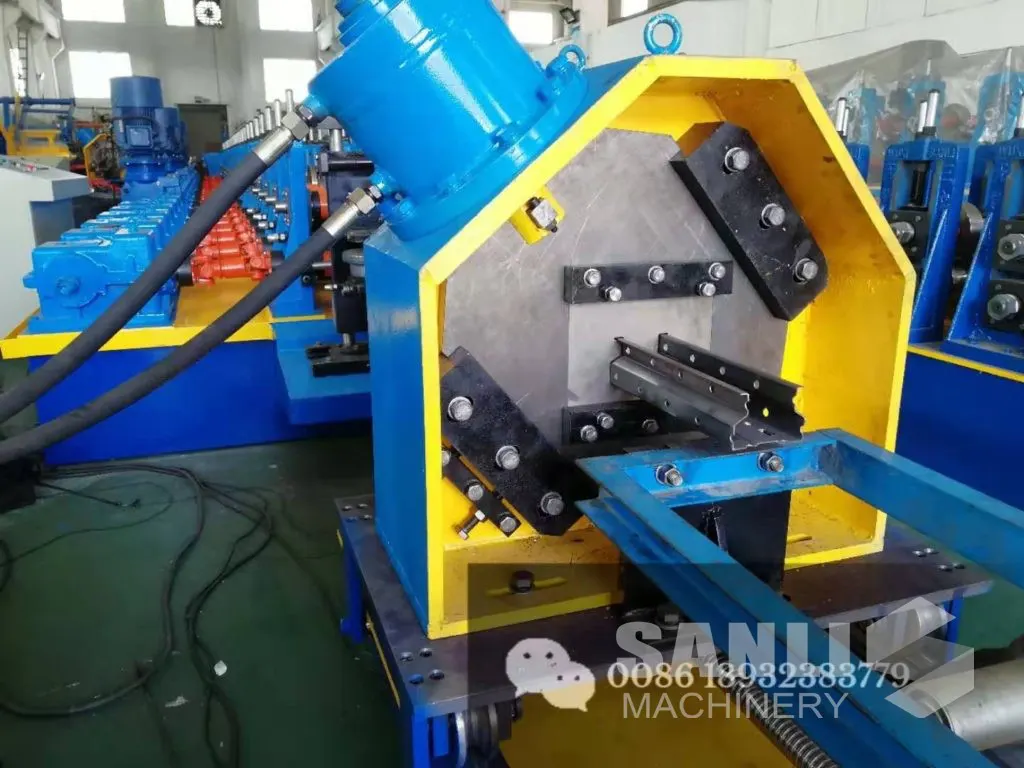
Rack Upright Roll Forming Machine
The first line most plants order: 1.5 – 3.0 mm, 18 stations, holes punched on line.
View machine -
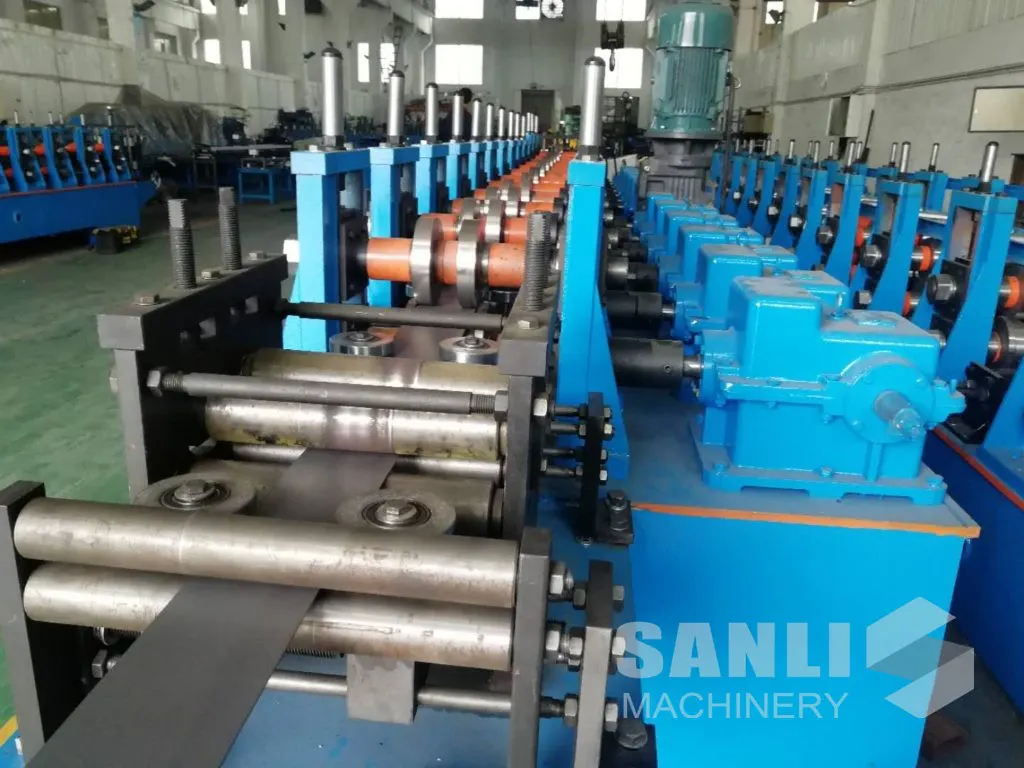
Rack Bracing Roll Forming Machine
Part of every full-mix order: 1.4 – 1.8 mm through 13 stations, output set by part count.
View machine -
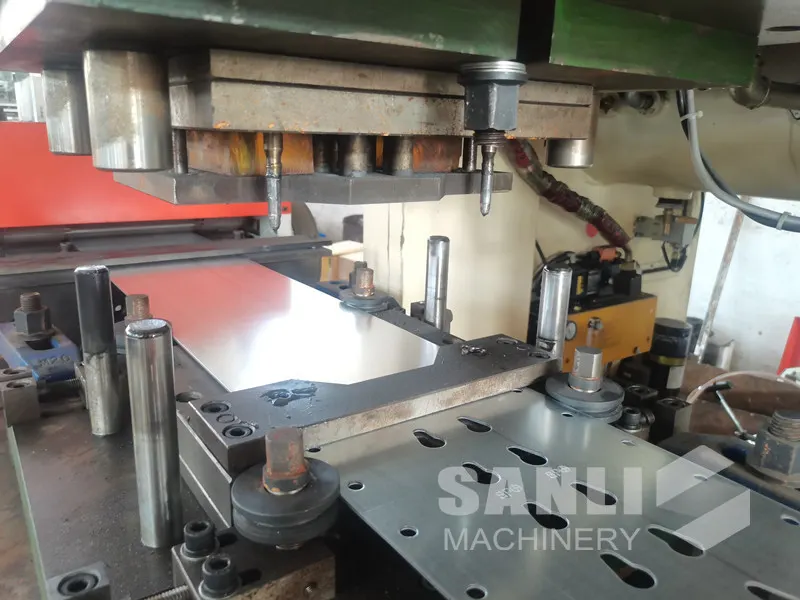
Punch Mould for Rack Upright
SKD11 tooling made to your hole drawing, 1.5 – 3.5 mm — the part that decides whether a frame assembles.
View machine
The other side
Where an imported line is the wrong answer in India
Three cases where a domestic machine builder serves you better, and it is cheaper to hear it now.
You need a spares shelf in the same city
If a roll or a punch set has to be replaced inside a week to keep a contract, hold stock yourself or buy locally. Sea freight is measured in weeks, and no specification closes that gap.
Your contractor must build the panel to IS practice on site
Where the panel has to be assembled and tested by a local contractor, agree at order that it ships as a kit with a wiring schedule. A finished panel arriving that nobody will certify is worse than a kit.
The section is still being redesigned
Roll design follows the drawing. Every revision after it starts is new tooling rather than a change order. Wait until the section is frozen, then tool up once.
Before you order
Questions this page usually raises
Do you have a service engineer in India?
No. Support is remote: the line runs on video, the first article is measured on camera and settings are adjusted against it. An engineer visit is quoted per trip, and it is usually taken for a first machine or when a new team is starting the line.
Which port do you ship to?
The discharge port is fixed on the order. Nhava Sheva and Mundra cover most of the west and north; Chennai and Kolkata serve the south and east. The port matters earlier than buyers expect, because it sets the inland leg and the crane capacity the site needs on arrival.
Can you build for 415 V, 50 Hz?
Yes — it is the standard build for India. Motor windings, contactor coils, the control transformer and overload ranges all follow 415 V rather than 380 V. Send the nameplate details of a machine already running in your plant and the specification is matched to it.
Can one machine run two different beam heights?
By changing the roll set and the cut length, yes. The roll set is designed for one section, so a height change is a roll change rather than an adjustment, and a change of hole pattern is a separate punch tooling change. Quote both if you expect to alternate.
In production
Lines running in this market
Written up after commissioning, with the section, the strip and the constraint each project had to work within.
-
Seven Lines, Eight Containers: A Racking Plant in India
A racking manufacturer in India took the whole part mix at once — upright, bracing, angle, ZS beam and punching — in…
Read the case →
Other markets
Send the drawing and the output you need
The section drawing, the strip grade and the pieces per shift are enough to specify the machine — and enough to tell you if a different configuration would serve you better.