
Market · North America
Rack Roll Forming Machines in the United States
US workshops run a Sanli bracing line since 2021 and an upright line that shipped in three containers in July 2022, accepted by video before loading. The US build is 480 V at 60 Hz, and the component list is the part of the quote that gets inspected.
- Grid
- 480 V / 60 Hz
- First shipment
- August 2021
- Upright line
- 3 containers
- Acceptance
- by video, before loading
What has shipped to the United States
A rack bracing line has been running in a US workshop since 2021, producing around 4,000 pieces in an eight-hour day on servo-follow non-stop cutting.
An upright machine followed in February 2022, built with cassette forming stands so that a profile change is a cassette change rather than a shift of stripping rolls and re-setting gaps. The customer asked for that because they expect to add rack profiles as the business grows, and a fixed line would have meant either a second machine or a skilled fitter on every change.
The upright line in three containers was loaded on 5 July 2022, after a remote acceptance test because travel restrictions prevented the customer from attending the run at our works.
Shipments to the United States on record
| Date | What shipped | Note |
|---|---|---|
| August 2021 | Rack bracing line | Servo follow non-stop cutting, around 4,000 pieces per shift |
| February 2022 | Rack upright machine | Cassette stands, profile change without re-setting |
| May 2022 | Remote inspection | Line filmed and every dimension measured on camera |
| July 2022 | Rack upright line | Three containers, accepted before loading |
Dates are loading dates from the project notes on this site. The May and July 2022 records describe the same machine.
The 480 V, 60 Hz build
US industrial supply is 480 V three-phase at 60 Hz. A machine wound for 50 Hz and run at 60 Hz runs 20% fast: the motor, the hydraulic pump and every timed function in the PLC move with it. So the build follows the frequency from the winding outward — pump displacement, pulley ratios and the programme are all set for 60 Hz.
The second difference is the component list. Where the plant's electrical inspector works to NFPA 79, the panel is built to that practice: disconnecting means, short-circuit protection, conductor identification, terminal numbering and a wiring diagram inside the door. This is the part of a quote that decides whether the line is approved, and it is set at order.
A panel that has to carry a label
One question decides more US projects than any other: whether the control panel has to carry a UL 508A label, or whether listed components inside a panel built to NFPA 79 are enough for the authority having jurisdiction. The two answers lead to different orders.
A 508A label is applied by a panel shop qualified under that standard, which in practice means a shop in the United States. Where the label is required, the honest arrangement is a mechanical line from Wuxi and a panel built and labelled locally from our schematic — and the schematic, the I/O list and the component schedule have to be agreed before the machine is built, not after it lands. Where listed components are enough, the panel ships complete and the label question does not arise.
Ask which of the two your inspector expects before the quote, because it changes the price and the schedule, and it cannot be settled at commissioning.
Acceptance by video
The 2022 line was accepted without the customer in the room. The inspection follows the same sequence as a visit: a walk-round of the assembled line with guarding and cabinet in place, a run on production coil rather than a short sample, dimensions measured on camera with the instrument in frame, the control system demonstrated through a length and batch change, and the values recorded and shipped with the machine as the reference for installation.
It works when the customer says what is to be measured before the call. It fails when it becomes a video tour: a tour shows that the line runs, which the customer already assumed. A measurement shows that the line meets the drawing.
Doing it before loading rather than after arrival changes who owns a problem. A problem found in Wuxi is ours. A problem found after a sea crossing is a dispute about what happened in transit.
Built for this market
The machines in the US orders
Each of these is a standard build quoted against your drawing, not a catalogue item. Where none of them fits, the custom range starts from the same components.
-
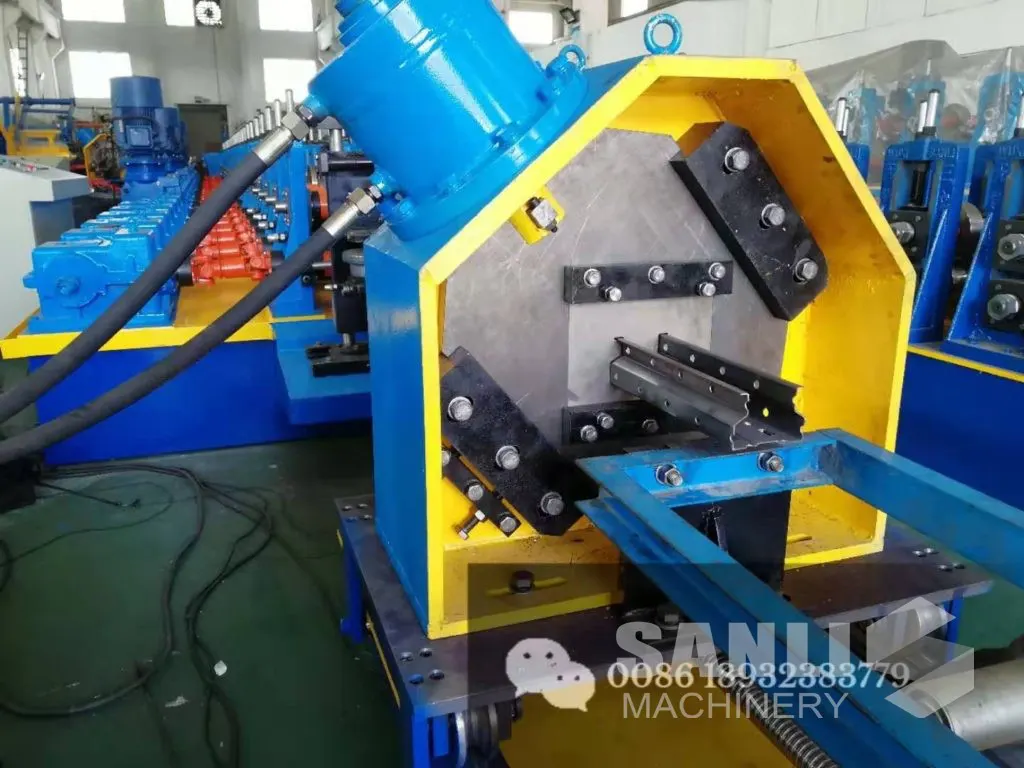
Rack Upright Roll Forming Machine
The line that shipped in three containers: 1.5 – 3.0 mm, 18 stations, 15 kW.
View machine -
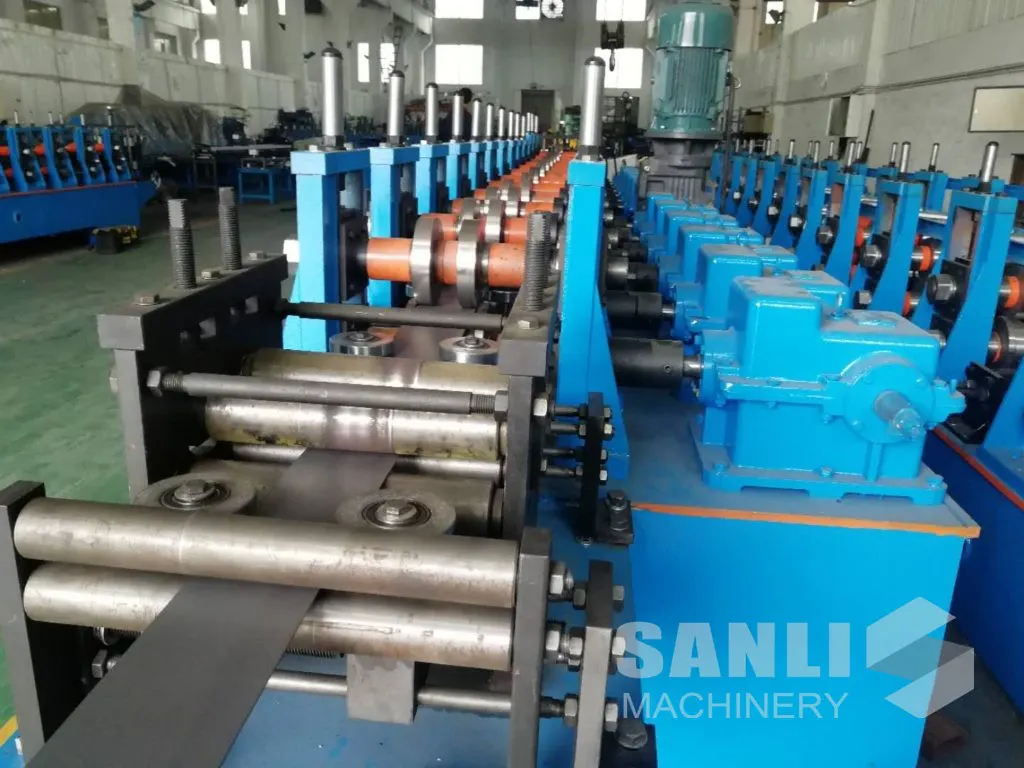
Rack Bracing Roll Forming Machine
Running in a US workshop since 2021 at around 4,000 pieces per shift.
View machine -
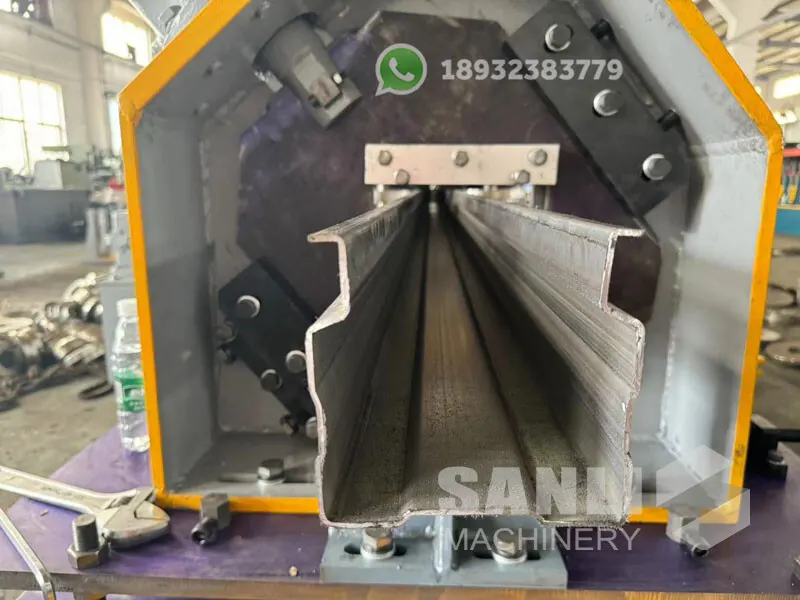
Heavy Duty Rack Upright Roll Forming Machine
Where the section goes above 3 mm: more stations, larger main motor, stiffer frame.
View machine
The other side
Where a machine from China will not clear the gate
Three requirements that decide the project before price is discussed, and none of them can be met after shipment.
The panel must be a listed assembly
If the authority requires a UL 508A label on the panel as an assembly, it is built and labelled in the US. Plan for a local panel shop and agree the schematic early, or choose a domestic builder.
Same-week spares are written into the contract
A sea freight of several weeks does not fit a maintenance contract with a same-week response clause. Hold spares on site, or buy where the spares already are.
The line has to be in production within weeks
Roll design, tooling and the build are the long items. If the date is fixed and short, a used or domestic machine is the only honest answer.
Before you order
Questions this page usually raises
Is the machine UL listed?
The machine as a whole is not a listed assembly, and no imported roll forming line is. Components can be UL listed where your inspector requires it, and the panel is built to NFPA 79 practice. If the panel itself has to carry a UL 508A label, it is built and labelled by a qualified shop in the US from our schematic — agree that at order, because it changes both price and schedule.
Can you build for 480 V and 60 Hz?
Yes — it is the standard US build. Motor windings, the hydraulic pump, the control transformer and every timed function in the PLC follow 60 Hz. A 50 Hz machine run at 60 Hz runs 20% fast, which is why the frequency is fixed at order rather than switched on site.
Do you send an engineer for installation?
Remote commissioning is included. An engineer visit is quoted as a separate line and is worth taking for a first line or a new team. For a repeat machine in a plant that already runs one, remote commissioning usually covers it.
What is the lead time for a US order?
Lead time is quoted per project, because the long items are the forming rolls and the punch tooling, both made to your drawing after the section is approved. Freezing the section early compresses the schedule more than any other decision, and the sea leg is the part that cannot be compressed.
In production
Lines running in this market
Written up after commissioning, with the section, the strip and the constraint each project had to work within.
-
4,000 Bracing Pieces a Shift: Servo Follow Cutting in the US
A bracing line in a US workshop runs 480 V / 60 Hz and cuts on the move. Servo follow cutting is…
Read the case →
Other markets
Send the drawing and the output you need
The section drawing, the strip grade and the pieces per shift are enough to specify the machine — and enough to tell you if a different configuration would serve you better.