
Market · Southeast Asia
Rack Roll Forming Machines in the Philippines
A fully automatic upright line was delivered to the Philippines in March 2021, after test running in January. It runs from decoiler to run-out table as one sequence, with a 100 t press punching the upright holes in the flat strip before forming.
- Grid
- 220 / 440 V / 60 Hz
- Test run
- January 2021
- Delivered
- March 2021
- Press
- 100 t, on-line
The line as delivered
The sequence is decoiler, leveler, servo feeder, 100 t press, main forming machine, hydraulic cutting, run-out table, with the control box governing length, batch count and the punch cycle. It is one continuous sequence rather than a set of stations with an operator between them.
Two stations in that sequence do work that is easy to underestimate. The leveler removes coil set — the curvature the strip keeps from being wound — before the strip reaches the first forming stand. Without it the strip enters the rolls already curved, the section comes out bowed, and no amount of roll adjustment afterwards will straighten it fully. The servo feeder is the other: it feeds by measured length rather than against a stop, which is what keeps the punch pattern in register with the cut on every piece in a batch.
Shipments to the Philippines on record
| Date | What shipped | Note |
|---|---|---|
| January 2021 | Upright line test run | Run on production coil before loading |
| March 2021 | Rack upright line delivered | Fully automatic, 100 t press, decoiler to run-out |
Both records describe the same machine: the test run in January and the shipment in March 2021.
Why the press tonnage is a specification, not a margin
An upright needs tear-drop or butterfly holes plus slots down its face, punched in the flat strip before forming. The tonnage is set by the largest slot the drawing calls for and by the strip thickness, with enough margin for the tool to hold its stroke without deflecting.
A press that is marginal on tonnage still makes holes. They are just slightly out of position on one side of the strip, and that error becomes a beam that will not seat — a fault that appears at assembly, two processes away from the machine that caused it. That is the argument for specifying the press against the worst hole in the drawing rather than against the average one.
The 60 Hz build
The Philippines runs 60 Hz, with 220 V single-phase and 440 V three-phase in common industrial use. A machine wound for 50 Hz and run at 60 Hz runs 20% fast, so the build follows the frequency from the motor winding outward: pump displacement, pulley ratios and the timed functions in the PLC are all set for 60 Hz.
Confirm the supply from a nameplate rather than from the grid standard. Plants on their own transformer, or in a building shared with other tenants, sometimes differ from what the utility publishes, and the difference is a winding rather than a setting.
What a buyer should check on arrival
An upright line is accepted on a sample rather than on a demonstration, and the sample has to be measured rather than looked at. Four numbers decide whether the line is right: section dimensions at the face and both flanges, hole pitch along the full length, hole-to-edge distance on the punched face, and straightness per metre.
Ask for those four to be recorded at the test run and shipped with the machine. They become the reference for installation, and later the reference for any argument about whether the line has drifted.
Built for this market
The machines in the Philippine orders
Each of these is a standard build quoted against your drawing, not a catalogue item. Where none of them fits, the custom range starts from the same components.
-
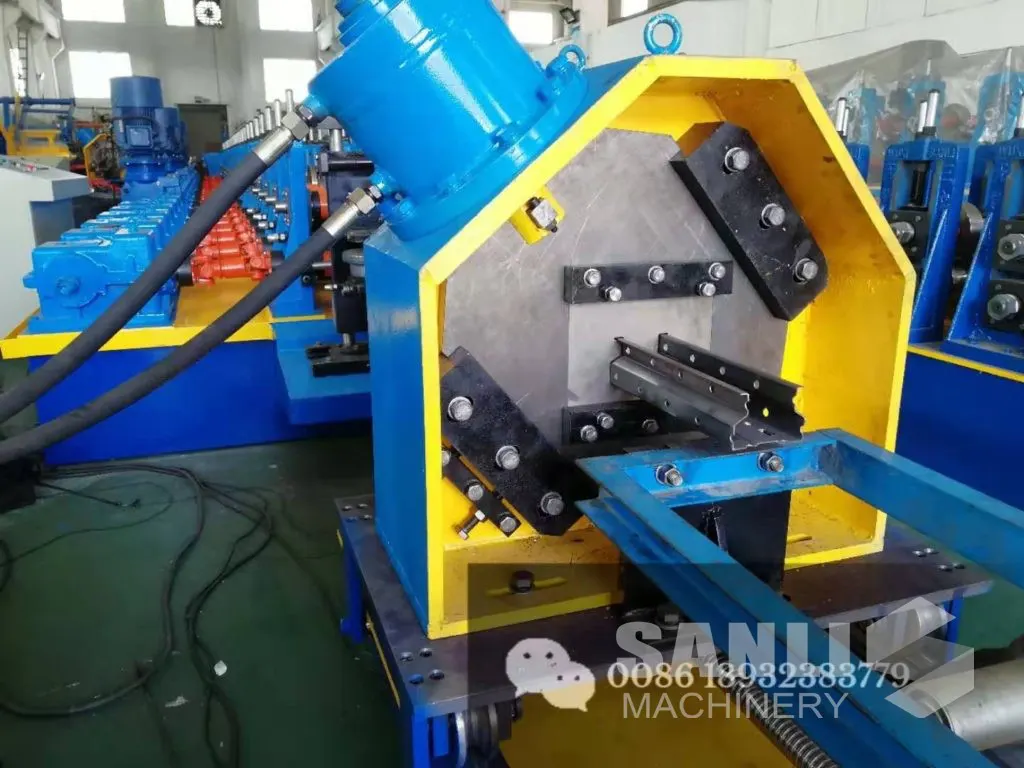
Rack Upright Roll Forming Machine
The line that shipped: 1.5 – 3.0 mm, 18 stations, 15 kW, holes punched on line.
View machine -
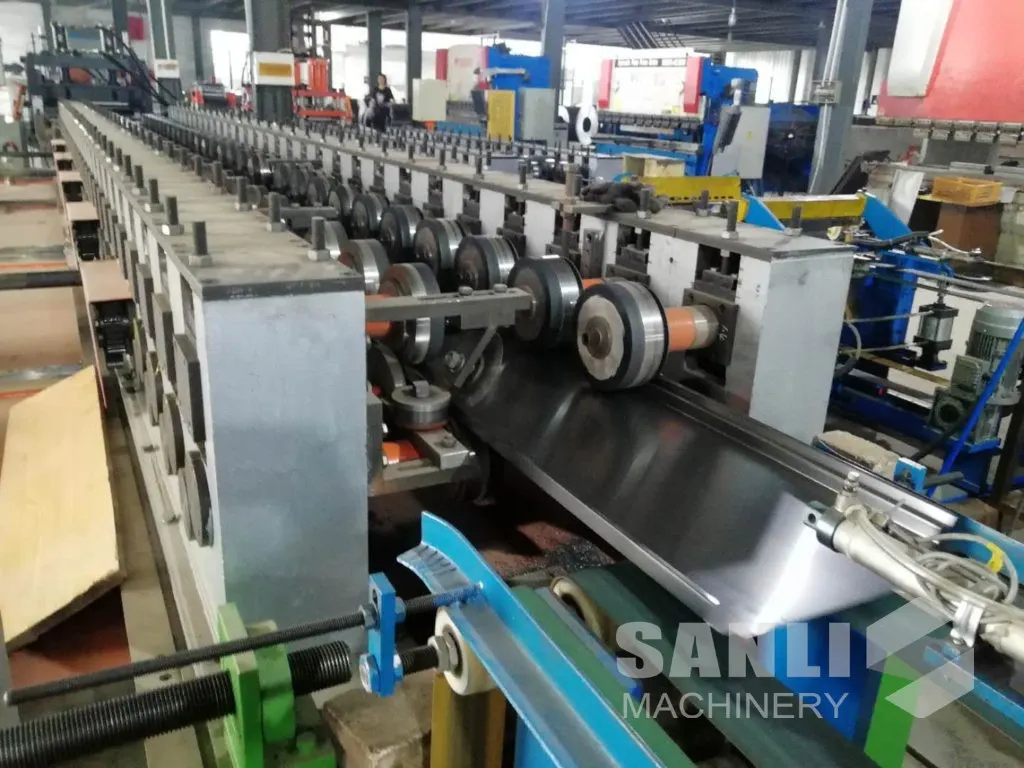
Rack Shelf Roll Forming Machine
The line most plants add next: 0.4 – 1.2 mm through 30 stations, thin gauge at short roll pitch.
View machine -
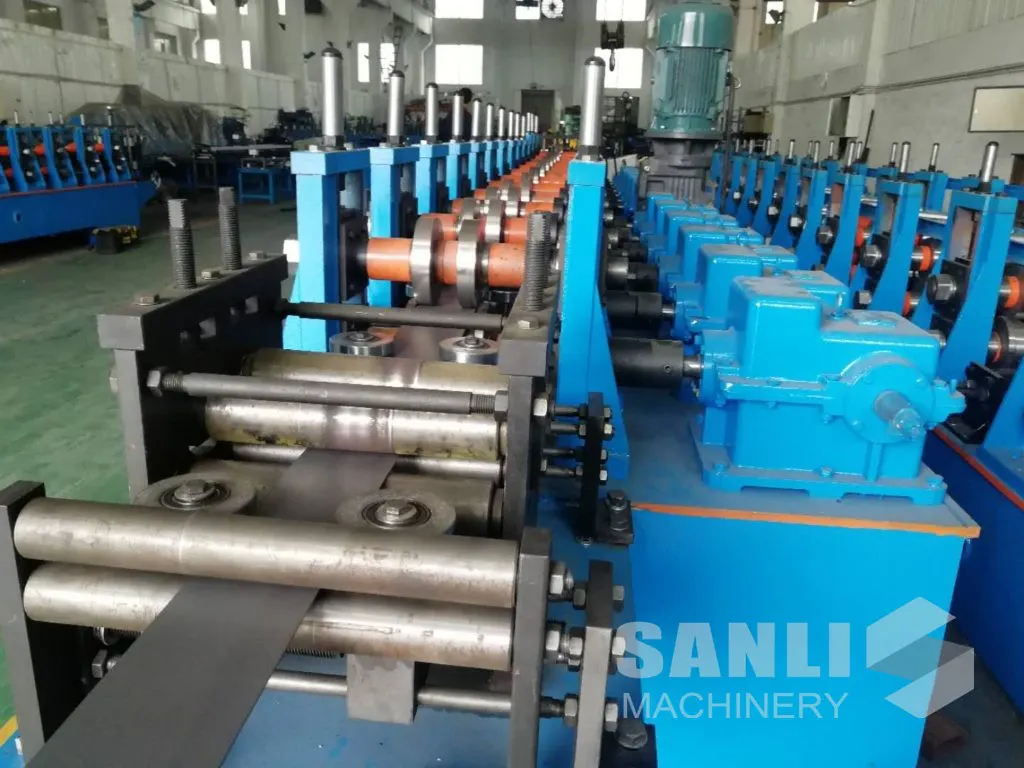
Rack Bracing Roll Forming Machine
The cheapest of the three, and the one where cutting method decides the daily output.
View machine
The other side
Where a full automatic line is more than you need
Automatic is not a quality grade. It is a labour decision, and it only pays where labour is the constraint.
One operator is already enough
If a semi-automatic line can be run by the people you have, the automatic build buys headcount you are not short of. The forming section is the same; the difference is in the handling at the ends.
You change section more often than you change shift
A line set up for one section is fast. One that changes section twice a day spends its advantage on changeover, and a bought-in supply is usually cheaper.
The part is available locally at a price you cannot beat
Under roughly 200 t a year on one section, a line spends more time idle than forming. The arithmetic only turns at volume.
Before you order
Questions this page usually raises
What does a fully automatic upright line include?
Decoiler, leveler, servo feeder, press, main forming machine, hydraulic cutting and run-out table, with one control box governing length, batch count and the punch cycle. The leveler and the servo feeder are the two items most often cut from a quote and most often regretted, because coil set and feed register are not recoverable later.
Why 100 t on the press?
Tonnage is set by the largest slot in the hole drawing and by the strip thickness, plus margin for the tool to hold its stroke without deflecting. A press that is marginal still punches, but the holes drift to one side of the strip, and that shows up at assembly as a beam that will not seat.
Can the machine be built for 220 V or 440 V at 60 Hz?
Yes. The build follows the site supply: motor winding, pump, control transformer and every timed function are set for 60 Hz. Send a nameplate photo from a machine already running in the plant and the specification is matched to it.
Do you provide the punch tooling?
Yes. Upright punch moulds are SKD11 with an inserted lower die, covering 1.5 – 3.5 mm upright thickness, made to your hole drawing for pitch, hole shape and edge distance. The tooling is supplied either as a standalone press tool or as the punching station on the line.
In production
Lines running in this market
Written up after commissioning, with the section, the strip and the constraint each project had to work within.
-
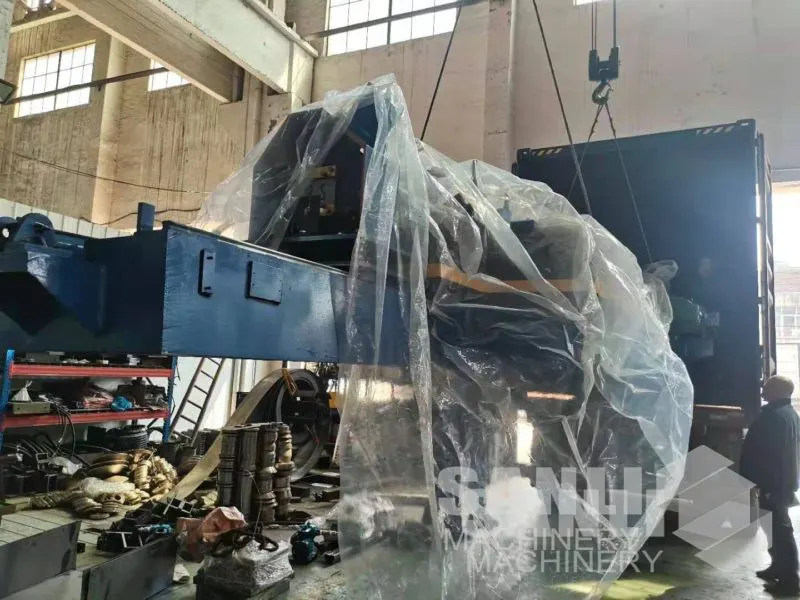
A Fully Automatic Upright Line in the Philippines
Decoiler to run-out as one sequence, a 100 t press ahead of the forming stands, and an acceptance run that measured the…
Read the case →
Other markets
Send the drawing and the output you need
The section drawing, the strip grade and the pieces per shift are enough to specify the machine — and enough to tell you if a different configuration would serve you better.