
Market · Latin America
Rack Roll Forming Machines in Mexico
An upright line was shipped to Mexico in February 2024 for a customer building uprights for an automated high-bay store. It forms coil up to 3 mm under full PLC control, and the tolerance that decided the build is straightness over a 12 m upright rather than section shape.
- Grid
- 440 V / 60 Hz
- Shipped
- February 2024
- Application
- AS/RS uprights
- Strip
- up to 3.0 mm
The project: uprights for an automated store
An automated storage and retrieval system stores pallets in a fixed grid up to 20 m or more and moves them with a stacker crane instead of a forklift. That changes what the upright has to do: it carries a heavier load at the top of a taller frame, and the beam levels have to sit accurately enough that the crane fork enters the pallet opening without touching the beam.
The tolerance that matters is straightness per metre. On a conventional 6 m pallet rack, an upright out by a millimetre is a nuisance. On a 12 m AS/RS upright the same millimetre puts the beam level out of position at the top, and the crane stops picking cleanly. That is why this line is a heavier build rather than a standard upright machine pushed to its limit.
Shipments to Mexico on record
| Date | What shipped | Note |
|---|---|---|
| February 2024 | Rack upright line | AS/RS project, coil up to 3 mm, full PLC control |
One order so far. The page will grow as the record does rather than being padded to look established.
Why 3 mm changes the machine
Upright thickness up to 3 mm is the top of the standard range, and it is the thickness rather than the face width that sets the machine. A 3 mm Omega section needs a higher station count, a larger main motor, a stiffer frame and a heavier press, because forming load rises roughly with the square of thickness and cutting force with it.
The rule that follows is worth remembering when specifying: a line built for 3 mm runs 1.5 mm happily, and a line built for 1.5 mm cannot run 3 mm at all. Quote the heaviest section you expect to sell in the next five years, not the one in the current order book.
On an AS/RS order there is a second reason to overspecify. The uprights are not a commodity part: they are made to a project drawing, in a fixed quantity, and a rejected batch is not replaceable from a subcontractor at short notice.
440 V, 60 Hz, and Spanish documentation
Mexican industrial supply is 440 V three-phase at 60 Hz. As with any 60 Hz market, the build follows the frequency from the winding outward rather than being switched on site.
Documentation is the other difference. Customs and plant engineering both work in Spanish, so drawings, the manual and the electrical schematic are supplied in Spanish on request for Mexican orders. Raise it at enquiry: the manual is printed and bound with the machine, and translating after shipment means shipping a second binder.
Where NOM declarations are required for the electrical components, agree with your customs broker which ones before the order. They are collected at build; after shipment they become a broker problem at the port, which is the most expensive place to solve it.
Built for this market
The machines in the Mexican order
Each of these is a standard build quoted against your drawing, not a catalogue item. Where none of them fits, the custom range starts from the same components.
-
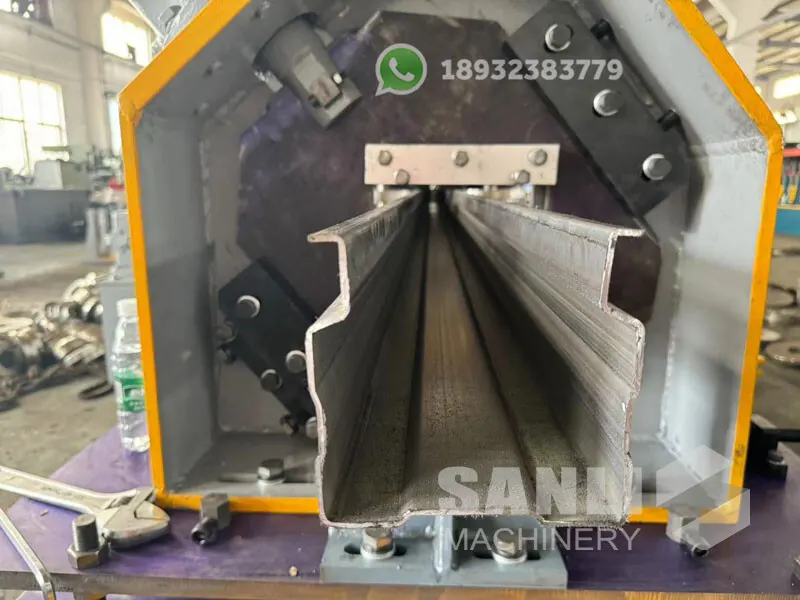
Heavy Duty Rack Upright Roll Forming Machine
The build that covers 3 mm: more stations, larger main motor, stiffer frame for straightness over length.
View machine -
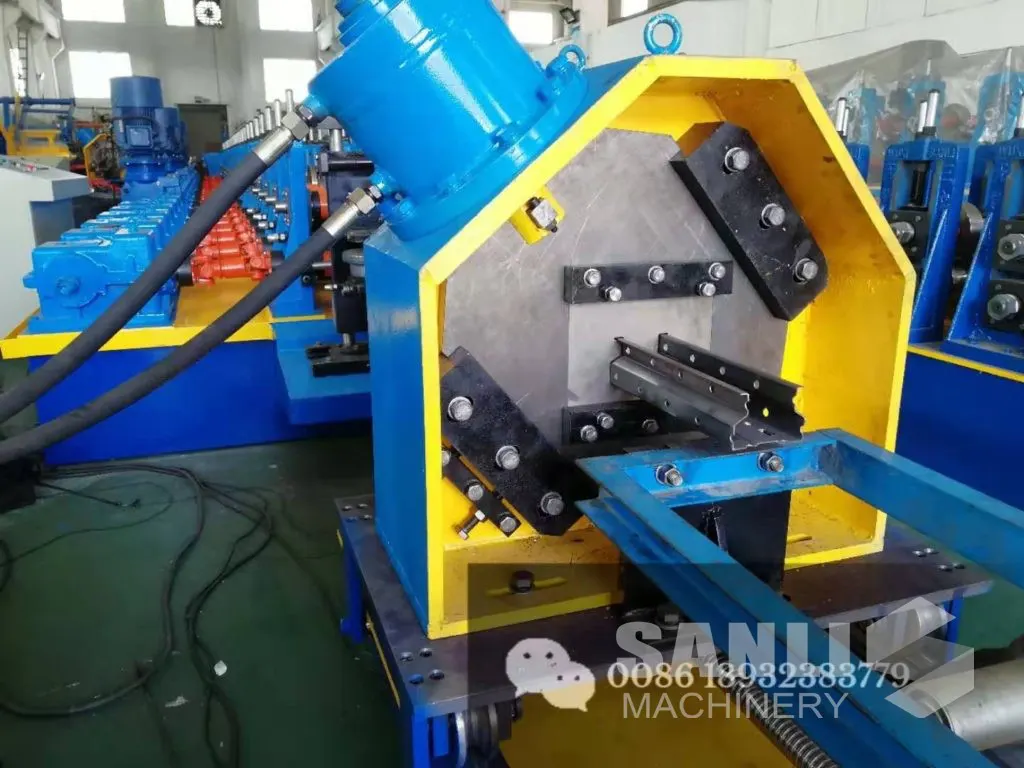
Rack Upright Roll Forming Machine
The standard range underneath it: 1.5 – 3.0 mm, 18 stations, holes punched on line.
View machine -
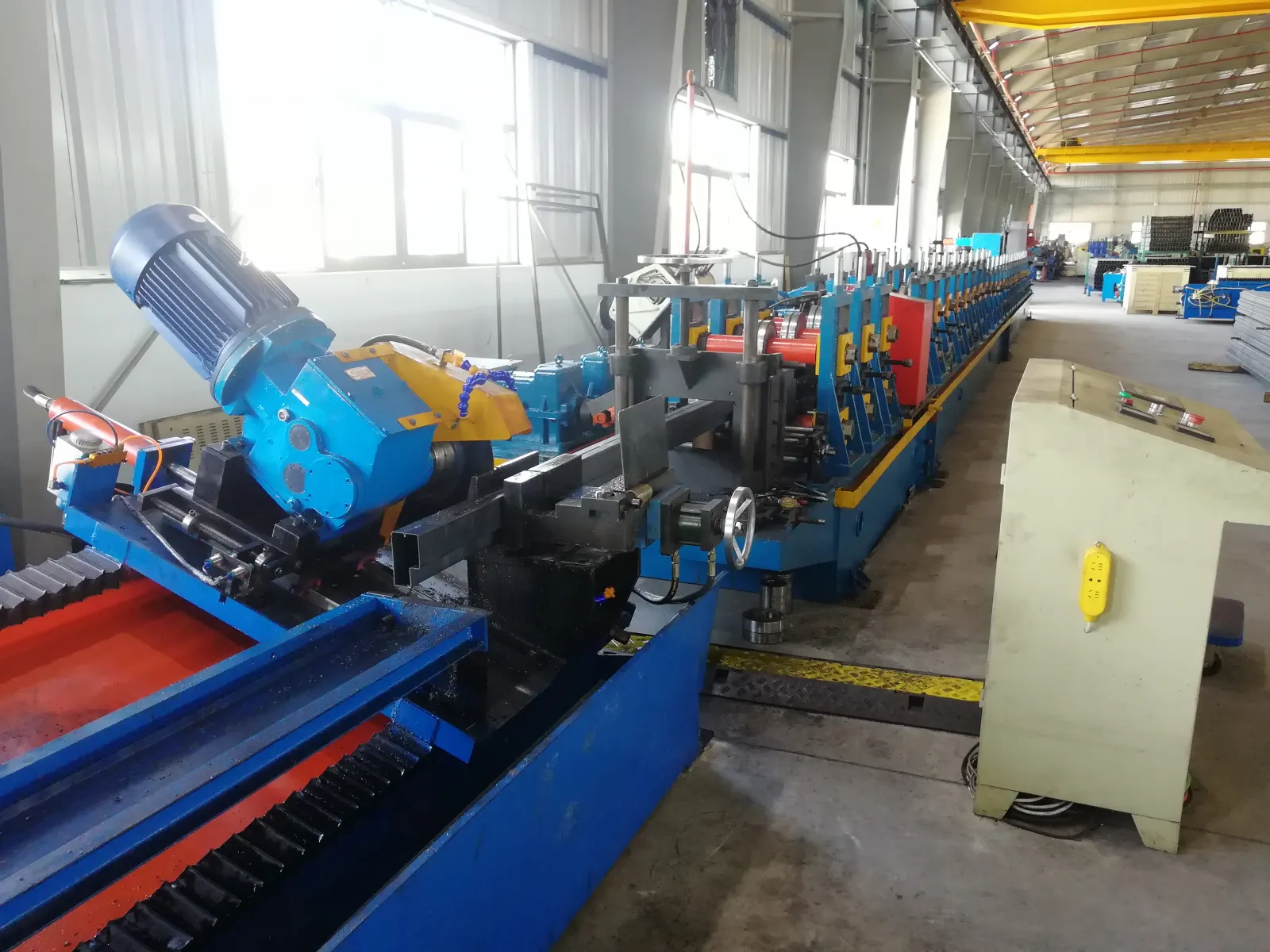
Pallet Rack Step Beam Roll Forming Machine
The beam that goes into the same frame: 1.2 – 1.6 mm, 23 stations, 30 kW, fly saw cut.
View machine
The other side
Where an AS/RS order needs a different supplier
Automated store tolerances are tighter than pallet racking tolerances, and not every project should be solved with a heavier machine.
The tolerance is tighter than the process can hold
If the crane supplier specifies a straightness the forming process cannot hold across a 12 m upright, the answer is a post-forming operation or a different section — not a heavier line. Settle it with the crane supplier before tooling.
The quantity is one project and no repeat
Roll design and tooling are a fixed cost per profile. On a single AS/RS project that cost lands entirely on that project. Compare it against bought-in uprights before tooling up.
The section drawing is still moving
AS/RS projects change late. Every revision after roll design starts is new tooling, and the delay is proportional to how far the revision goes.
Before you order
Questions this page usually raises
Do you have customers in Mexico we can visit?
One line shipped in February 2024. Whether a visit is possible depends on that customer, and we will ask rather than promise. If a reference visit is a condition of the order, treat the answer as no until they agree.
Can documentation be supplied in Spanish?
Yes, on request for Mexican orders: drawings, manual and electrical schematic. Raise it at enquiry rather than after the machine is built, because the manual is printed and bound with the machine and a second shipment of documents is avoidable.
What strip thickness should we specify for an AS/RS upright?
The heaviest you expect to sell in the next five years, not the one in the current order. A 3 mm line runs 1.5 mm without complaint; a 1.5 mm line cannot run 3 mm at all, and the difference is a station count and a main motor rather than a setting.
Which certification applies to the machine in Mexico?
NOM requirements attach largely to the electrical components rather than to the machine as a whole, and what your broker needs varies by entry. Agree the list at order: the declarations are collected at build, and after shipment they become a port problem.
In production
Lines running in this market
Written up after commissioning, with the section, the strip and the constraint each project had to work within.
-
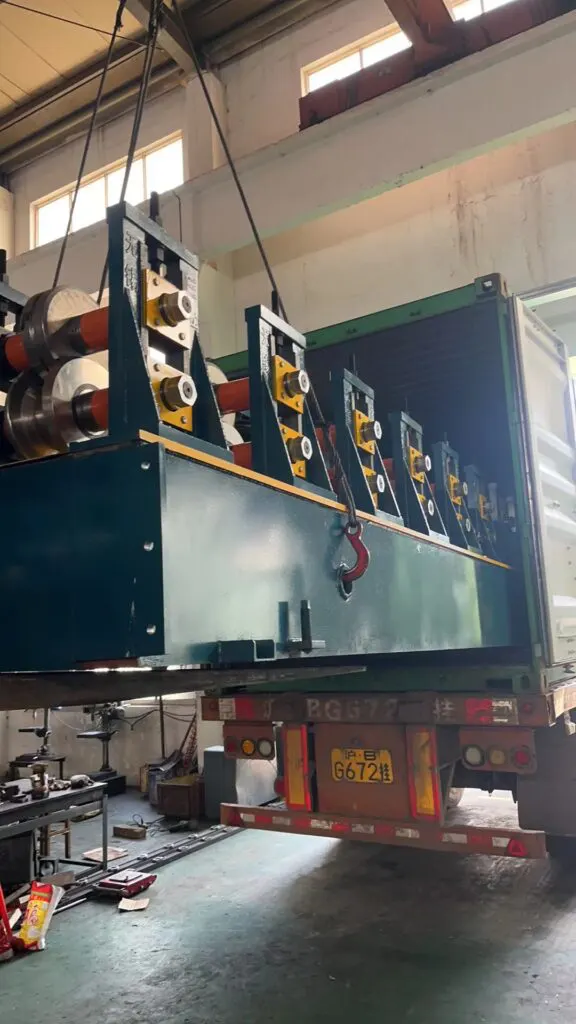
3 mm Uprights for an Automated Warehouse in Mexico
An upright line for a stereoscopic warehouse, coil up to 3 mm, servo follow cutting. On a 12 m frame the tolerance…
Read the case →
Other markets
Send the drawing and the output you need
The section drawing, the strip grade and the pieces per shift are enough to specify the machine — and enough to tell you if a different configuration would serve you better.