
Export · voltage, packing, commissioning
Rack Forming Machines for Export Projects
A rack roll forming machine exported to India, Mexico, the United States or the Philippines is the same machine with a different electrical specification, a different packing standard and a different commissioning plan. All three are fixed at order. Getting them wrong afterwards costs more than the machine saves.
- Voltage options
- 380 / 415 / 440 / 480 V
- Frequency
- 50 or 60 Hz
- Packing
- Film, then plywood case
- Commissioning
- Remote or on site
Voltage and frequency are order items, not options
The machines are built for 380 V / 50 Hz as standard, and every build is wired to the destination at order: motors, inverters, contactors, the control transformer and the panel labelling all follow. A machine specified for 380 V that arrives at a 480 V plant needs a transformer or new motors, and neither is a small change.
Frequency matters as much as voltage and is more often missed. A 50 Hz motor on a 60 Hz supply runs about 20% faster, which changes line speed, cut length control and the hydraulic pump output. Tell us the supply at enquiry: voltage, frequency, phases and whether the neutral is available.
Supply and specification by market
| Market | Typical supply | What to confirm at order |
|---|---|---|
| India | 415 V / 50 Hz, 3 phase | Component standard, nameplate language, documentation set |
| Vietnam | 380 V / 50 Hz, 3 phase | Land transport routing and border documentation |
| Mexico | 440 V / 60 Hz, 3 phase | NOM documentation, Spanish manual and panel labels |
| United States | 480 V / 60 Hz, 3 phase | UL-listed components where the plant requires them |
| Philippines | 380 – 440 V / 60 Hz, 3 phase | Confirm the plant supply; both are common |
| Spain / EU | 400 V / 50 Hz, 3 phase | CE documentation scope, agreed before the order |
Supplies vary between plants in the same country. The nameplate on your existing machine is the most reliable reference.
Packing is part of the machine specification
A rack forming line does not travel as one piece. The forming section, decoiler, control cabinet and the loose items are packed separately, and the total is measured in containers rather than in cubic metres: a rack upright line shipped to a US customer went in three containers, which is a normal figure for a complete line with coil car and run-out.
Sea freight is unforgiving of two things — moisture and movement. Machines are wrapped in film against humidity and crated in plywood, with the rolls and shafts braced so they cannot turn in transit. If the destination is a long sea route or a humid climate, ask for desiccant and for the electrical cabinet to travel sealed; both are cheap at packing and expensive at arrival.
- Container count and loading plan, agreed before shipment so the site can plan unloading.
- Lifting points marked on each crate, and a crate list matching the packing list.
- Electrical cabinet sealed with desiccant where the route is humid.
- Spare rolls, punch tooling and a PLC backup shipped with the machine, not after.
Commissioning without a flight
Most of our export machines are commissioned remotely: the customer runs the line on video with our engineer, the first article is measured on camera, and adjustments are made step by step. It works because the parameters that matter — roll gap, straightener setting, cut length — are all visible on a measured sample rather than hidden inside the control system.
Where a site visit is the better answer is a first machine, a new team, or a section that needs tooling work on arrival. That is quoted as a separate line so it is a decision rather than a surprise. Whichever route you take, the same thing decides how long it takes: whether the strip and the drawing are ready when the machine lands.
The machines from this workshop run in India, Vietnam, Mexico, Bangladesh, Pakistan, the Philippines, Spain and the United States — the market pages list what shipped to each. If your market is not on that list, the constraint is usually documentation rather than the machine.
Machines for this job
The builds that cover it
Each of these is a standard build quoted against your drawing, not a catalogue item. Where none of them fits, the custom range starts from the same components.
-
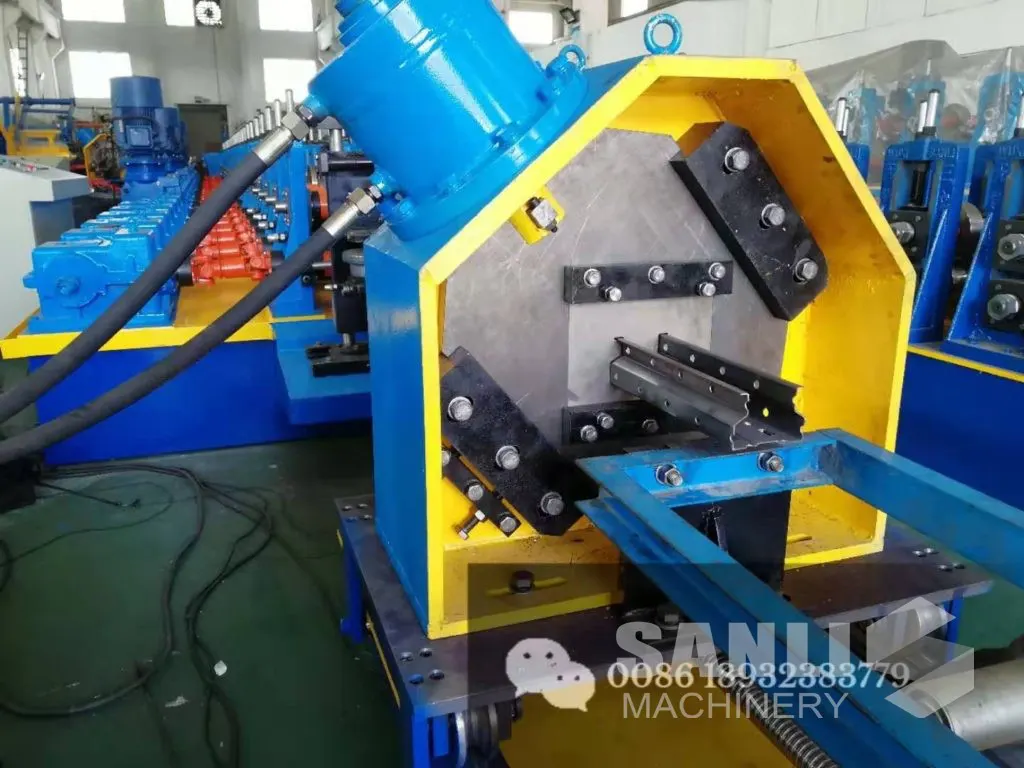
Rack Upright Roll Forming Machine
The most-exported build: 1.5 – 3.0 mm, 18 stations, 15 kW, wired to destination at order.
View machine -
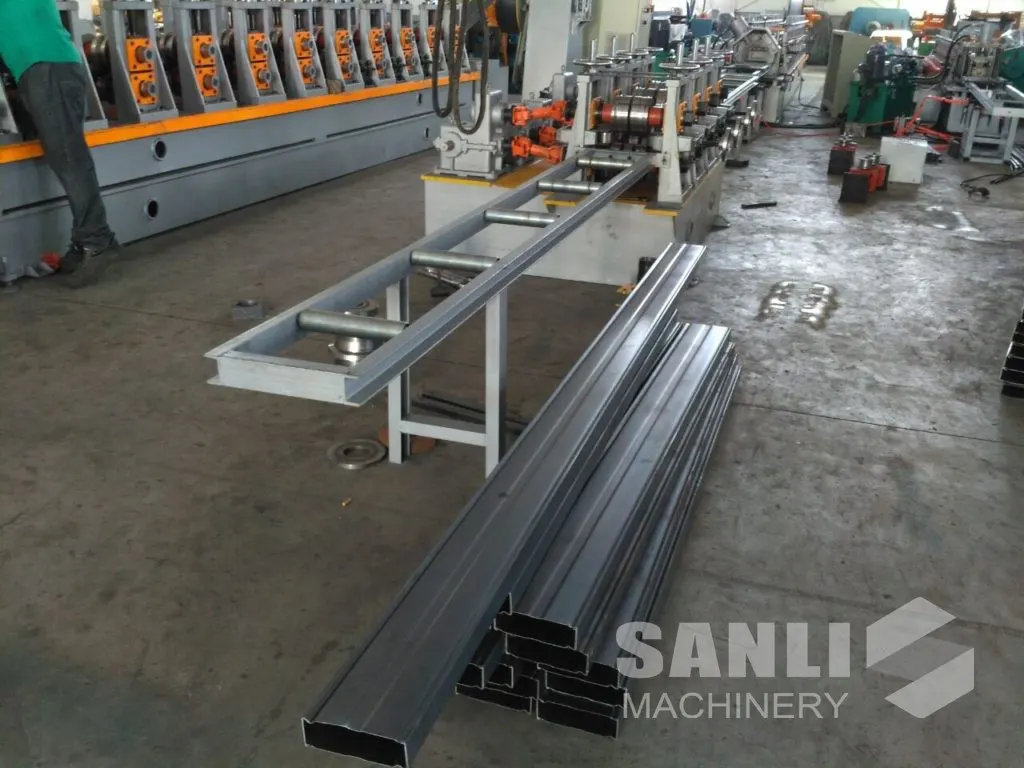
Rack Box Beam Roll Forming Machine
Beams at 1.5 – 1.8 mm on 14 stations — compact enough for a first export line.
View machine -
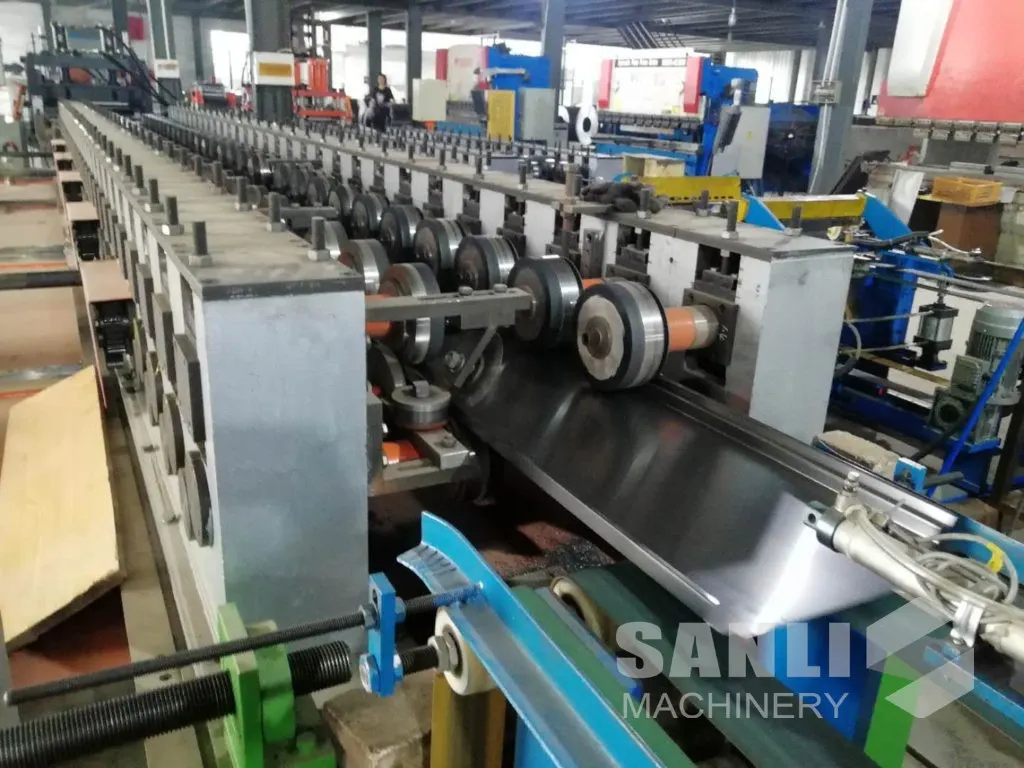
Rack Shelf Roll Forming Machine
Shelf panels at 0.4 – 1.2 mm, 30 stations; ships as a compact unit with the coil stand.
View machine
The other side
What can go wrong on an export order
These are the four things that turn a good machine into a bad project, and none of them are about the machine.
The supply was not confirmed
Voltage, frequency and phases taken from a website rather than from the plant. The machine arrives correct for a different factory. Confirm from the nameplate on an existing machine.
The drawing changed after tooling started
Rolls and punch tools are made to the section. Every revision after roll design begins adds its own delay, and the delay is proportional to how far the revision goes.
No one is ready to receive it
A line that lands before the coil, the foundation and the operator exist sits in its crates. Book the commissioning date against the material arrival, not against the shipment date.
Before you order
Questions this page usually raises
What voltage are the machines built for?
380 V / 50 Hz is the standard build, and every machine is wired to the destination at order: 415 V for India and Pakistan, 440 V for Mexico, 480 V for the United States, 400 V for the EU, and 60 Hz variants where the plant runs at 60 Hz. Send the nameplate details of an existing machine in the same plant and the specification is matched to it.
How many containers does a rack upright line need?
A complete upright line with coil car and run-out normally ships in three containers — that is what a recent US shipment took. The count follows the configuration: a standalone former is fewer, a line with a long run-out or a stacker is more. We agree the loading plan before shipment so the site can plan unloading and storage.
Is commissioning included?
Remote commissioning is included: the line is run on video, the first article is measured on camera and the settings are adjusted against it. An engineer visit is quoted as a separate line, because travel and duration vary by destination. It is worth taking for a first machine or a new team.
Do you supply CE or UL documentation?
Component selection is fixed at order, so UL-listed components can be specified where a US plant requires them, and the documentation scope for CE markets is agreed before the order rather than after. Say which certificate your customer requires at enquiry — it changes the component list, and changing it later means rebuilding panels.
Other selection guides
Selection guides
Head to head
Send the drawing and the output you need
The section drawing, the strip grade and the pieces per shift are enough to specify the machine — and enough to tell you if a different configuration would serve you better.